

Description
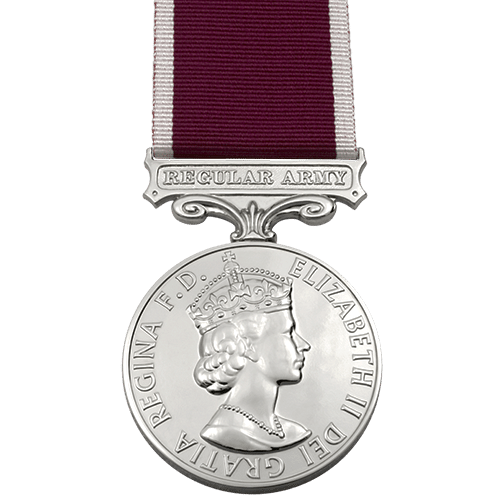
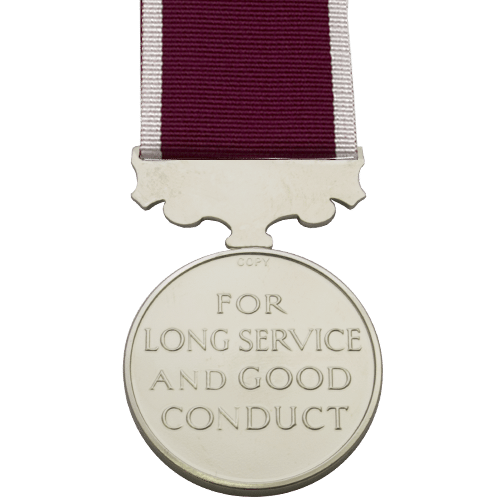
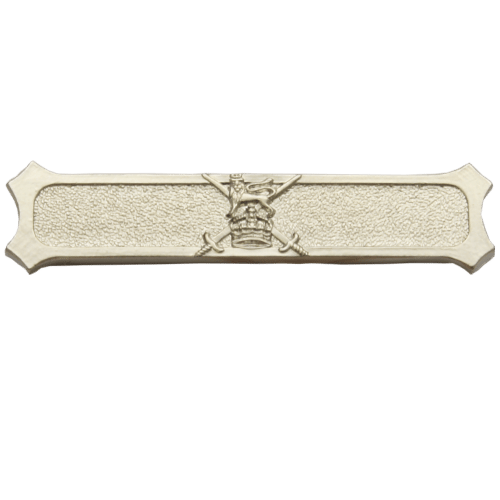
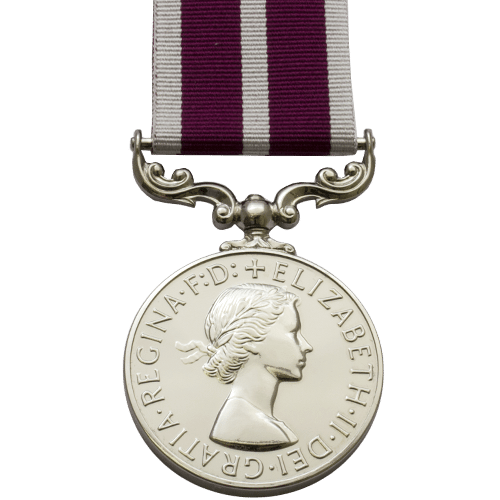
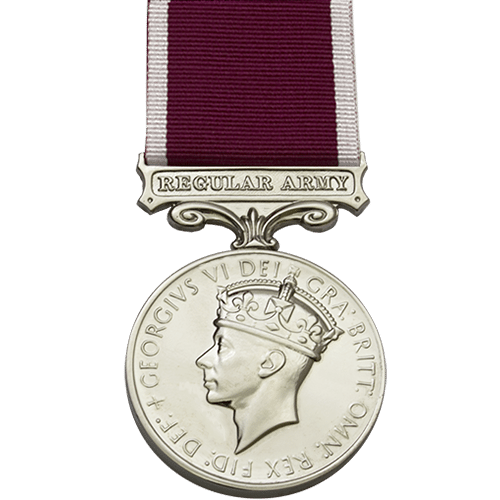
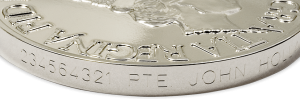
Army Long Service And Good Conduct LSGC Medal EIIR Full Size
Instituted: 1830.
Branch of Service: Army.
Ribbon: Plain crimson was used till 1917 when white stripes were added to the edges. Dominion and colonial medals formerly had crimson ribbons with a narrow central stripe in dark green (Commonwealth of Australia), dark blue (New South Wales ), light blue (Queensland), pink (Tasmania), orange (Cape of Good Hope), yellow (Natal), white (Canada), light green (NZ). New Guinea had a scarlet ribbon with a light blue central stripe and South Australia had no central stripe on a plain crimson ribbon.
Original Metal: Silver.
Size: 36mm.
Description: Over the long period in which this medal has been in use it has undergone a number of changes. Until 1901 the obverse bore a trophy of arms with the royal arms in an oval shield in the centre while the reverse bore the inscription FOR LONG SERVICE AND GOOD CONDUCT. The first issue had the royal arms with the badge of Hanover on the obverse and small suspension ring with a plain crimson ribbon. A large ring was substituted in 1831. On the accession of Queen Victoria in 1837 the Hanoverian emblem was dropped from the arms. In 1855 a swivelling scroll suspension was substituted and in 1859 small lettering replaced the original large lettering on the reverse. From 1901, however, the effigy of the reigning sovereign was placed on the obverse although the reverse remained the same. In 1920 the swivelling scroll suspension gave way to a fixed suspender. In 1930 the title of the medal was changed to the Long Service and Good Conduct (Military) Medal; at the same time the design was modified. A fixed suspension bar was added, bearing the words REGULAR ARMY or the name of a dominion (India, Canada, Australia, New Zealand or South Africa). This replaced the Permanent Forces of the Empire LSGC Medal.
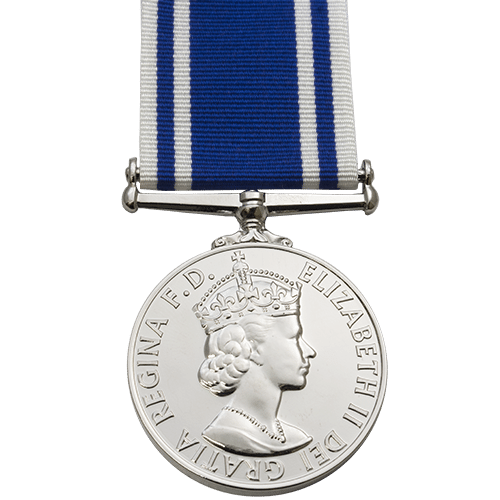
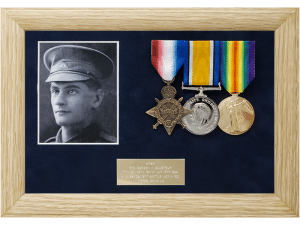 Medals are mounted ready for wear and then placed on a block within the frame. This allows for the easy removal and replacement of the medals as required, meaning they can be removed for wear on parade or for cleaning.
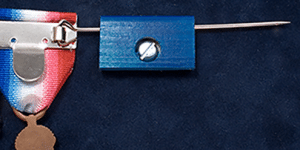 The medals will hang from the block at a slight angle much as they would if they were being worn on the chest.
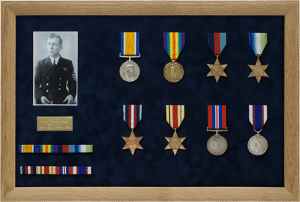 Medals are not mounted ready for wear and instead are placed flat against the frame backing with the medal ribbon secured through a slot. This means that the medals cannot be removed from the frame and cannot be worn.
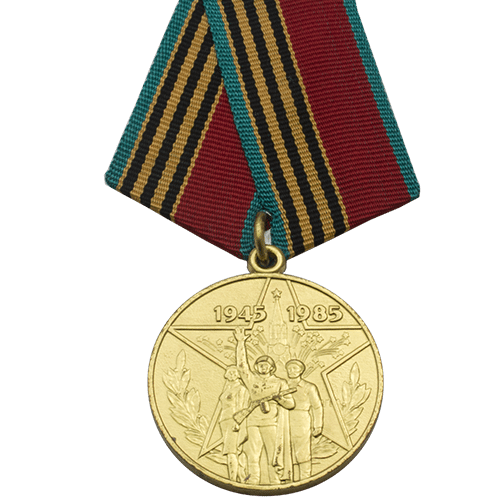
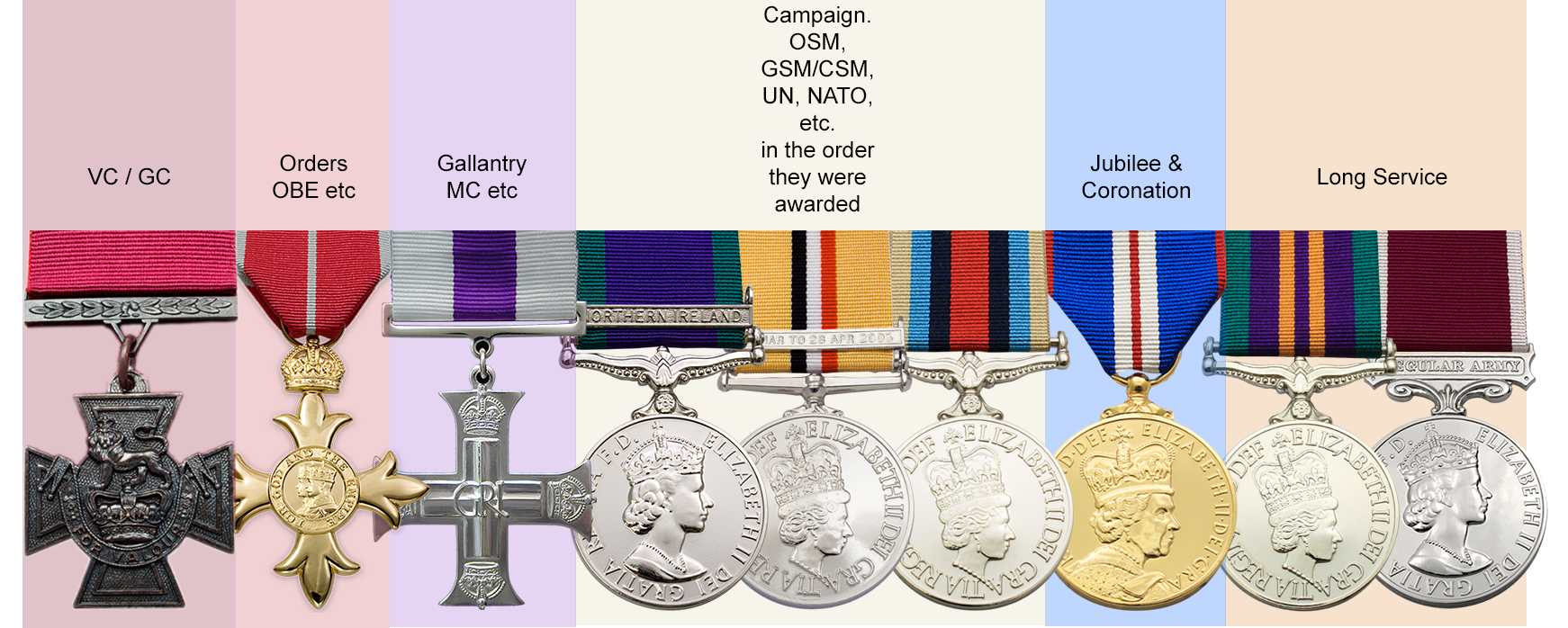
 Medal mounting swing style is the more traditional method of mounting medals. Swing Style or ordinary style mounted medals are mounted on a medal brooch bar which can then be pinned to your tunic directly, through becketts or attached to a pocket holder. This style of medal mounting allows the medals to move or ‘swing’ when worn. Over time, the edge of the medals can become damaged due to the medals “clinking” together.
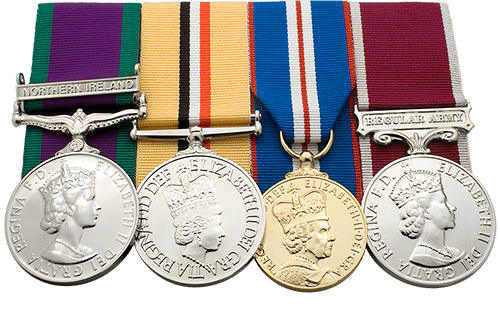 Medal mounting court style is alleged to have began during the reign of Queen Victoria. Those attending the Queen would wear medals court mounted to stop them “clinking”. Other sources suggest that the Cavalry first adopted the practice. Either way, this style of medal mounting is becoming more popular. Court mounted medals are fixed to a rigid backing material called buckram. The buckram is then covered in a felt material before the medals are mounted on their own ribbon length. This style of medal mounting holds the medals firmly in place and prevents them ‘clinking’ together and damaging each other when worn.

Reviews
There are no reviews yet.