
Description
British War Medal
British War Medal was instituted to record the successful conclusion of the First World War, but it was later extended to cover the period 1919–20 and service in mine-clearing at sea as well as participation in operations in North and South Russia, the eastern Baltic, Siberia, the Black Sea and Caspian. Some 6,500,000 medals were awarded in silver, but about 110,000 in bronze were issued mainly to Chinese, Indian and Maltese personnel in labour battalions. It was originally intended to award campaign clasps, but 79 were recommended by the Army and 68 by the Navy, so the scheme was abandoned as impractical. The naval clasps were actually authorised (7 July 1920) and miniatures are known with them, though the actual clasps were never issued.
Date: 1919
Branch of Service: British and imperial forces.
Ribbon: Orange watered centre with stripes of white and black at each side and borders of royal blue.
Original Metal: Silver or Bronze.
Size: 36mm.
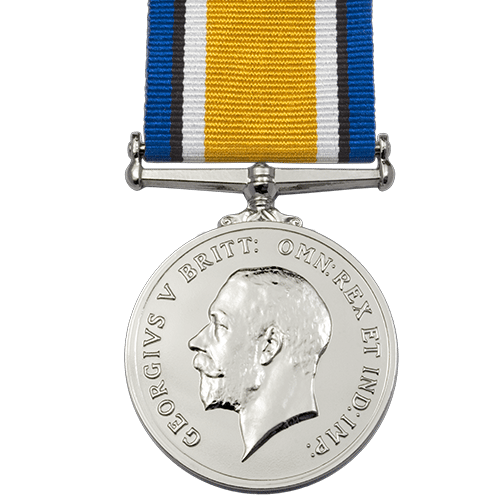
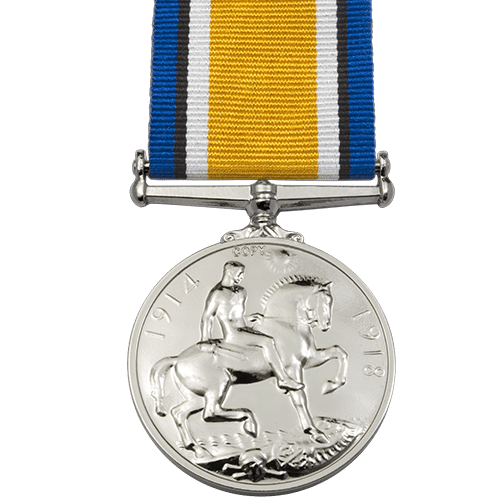
Description: (Obverse) the uncrowned left-facing profile of King George V by Sir Bertram Mackennal. (Reverse) St George on horseback trampling underfoot the eagle shield of the Central Powers and a skull and cross-bones, the emblems of death. Above, the sun has risen in victory. The figure is mounted on horseback to symbolise man’s mind controlling a force of greater strength than his own, and thus alludes to the scientific and mechanical appliances which helped to win the war.
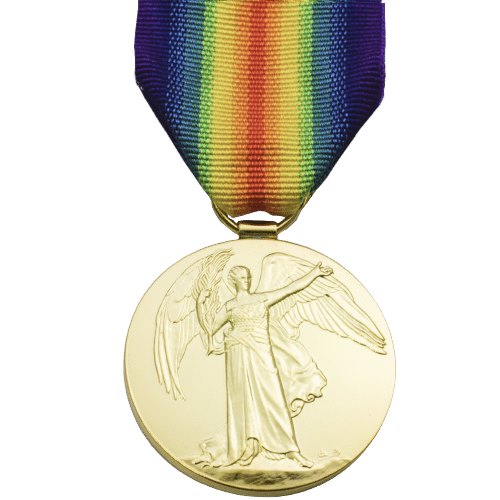
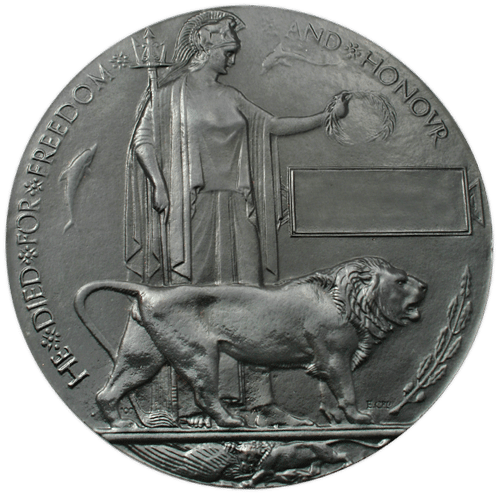
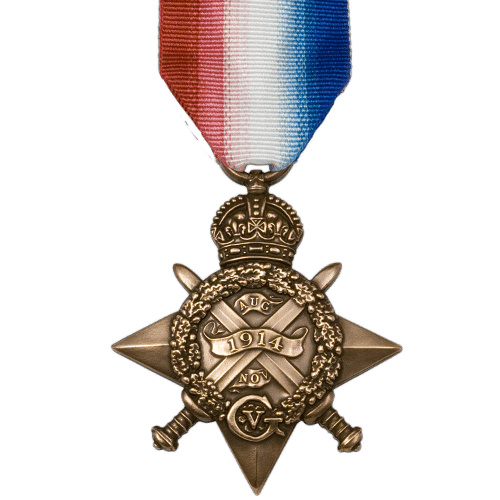
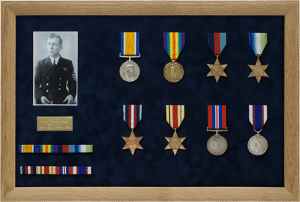
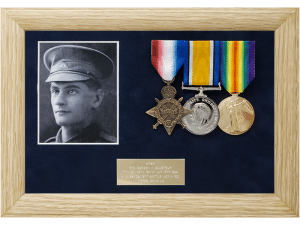 Medals are mounted ready for wear and then placed on a block within the frame. This allows for the easy removal and replacement of the medals as required, meaning they can be removed for wear on parade or for cleaning.
 The medals will hang from the block at a slight angle much as they would if they were being worn on the chest.
 Medals are not mounted ready for wear and instead are placed flat against the frame backing with the medal ribbon secured through a slot. This means that the medals cannot be removed from the frame and cannot be worn.
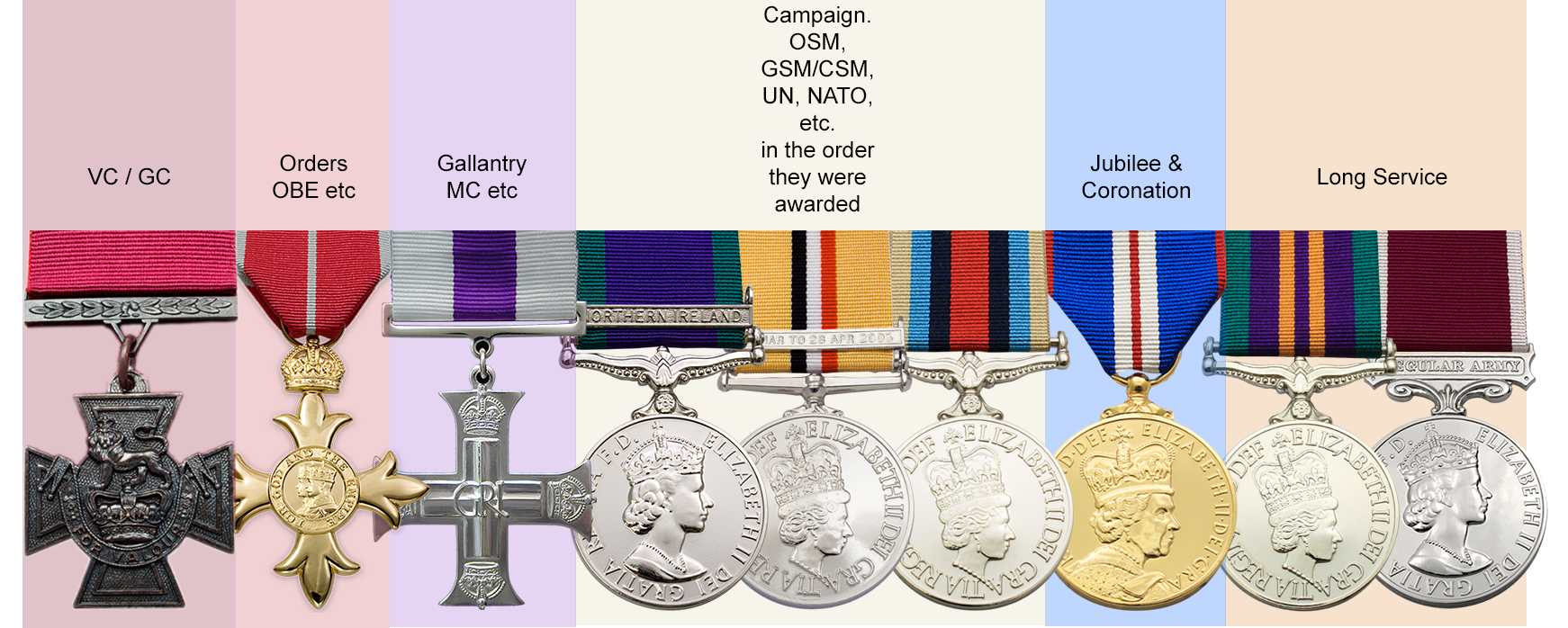
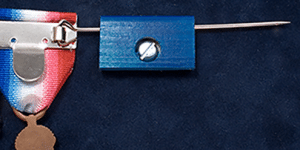
 Medal mounting swing style is the more traditional method of mounting medals. Swing Style or ordinary style mounted medals are mounted on a medal brooch bar which can then be pinned to your tunic directly, through becketts or attached to a pocket holder. This style of medal mounting allows the medals to move or ‘swing’ when worn. Over time, the edge of the medals can become damaged due to the medals “clinking” together.
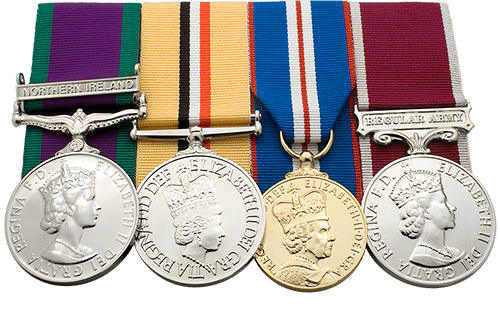 Medal mounting court style is alleged to have began during the reign of Queen Victoria. Those attending the Queen would wear medals court mounted to stop them “clinking”. Other sources suggest that the Cavalry first adopted the practice. Either way, this style of medal mounting is becoming more popular. Court mounted medals are fixed to a rigid backing material called buckram. The buckram is then covered in a felt material before the medals are mounted on their own ribbon length. This style of medal mounting holds the medals firmly in place and prevents them ‘clinking’ together and damaging each other when worn.
Bert Steinhardt –
A number of years ago I received a pair of British WWI cavalry swords through my father-in-law. A little bit of research showed the pieces had been issued in WWI to two seperate Canadian Cavalry units. This eventually led to my finding documentation on two individuals within those units. I was able to locate a set of originals for one but not the other. I originally sought to obtain two un-named medals (British War Medal and Victory Medal) but finding these was as hard as finding hen’s teeth in a snow storm.
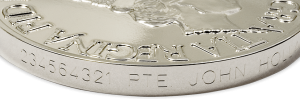
I eventually chanced upon Bigbury Mint and liked the fact of them being licenced by the MoD to reproduce the medals.I received my medals today and am thrilled with the quality of the product. During the purchasing process there was an issue as to the engraving. This issue was spotted by Bigbury staff who contacted me to point out the problem and offered suggestions of remedy. Such customer service really gives one confidence when dealing at arms length. Thank you.
Peter Penney –
I bought this medal as part of a Pip, Squeak and Wilfred set engraved with my wife’s grandfather’s details, and we are very impressed with the high quality of the medal, the speedy service and the help received in getting the engraving as accurate as possible. The quality of this medal makes it a very fitting link to a hero my wife never had the privilege of meeting, and as such I would have no hesitation in recommending Bigbury to anyone.
Regards
Pete
Adam –
I inherited my grandfather’s British War and Victory medals – plus miniatures – a few years ago. Recently my brother has shown an interest via his daughter’s school work – in WW1 battlefields and my grandfather’s service. With a significant birthday on the horizon, I decided copies would make a great present. Comparing the original to the copies, including the colour and weave of ribbon, reveals how close they are and what good quality. I also had personalised engraving in my grandfather’s name, and mounted them swing style. I think they’ll make a fantastic present and would recommend Bigbury to anyone thinking about ordering replicas.
John Chadwick –
Dear Adam, thank you very much for taking the time to write. It is very much appreciated. I’m glad the medals were well received!
Best regards,
Matthew.
Bigbury Mint.
Grahame Metcalfe –
Thank you so much for the speedy delivery (all the way from UK to NZ in a few days) of my Uncles Medals. The quality is superb. I am sure that my son will wear these medals proudly along with his own at meetings and ceremonies.