

Description
Defence Medal World War 2
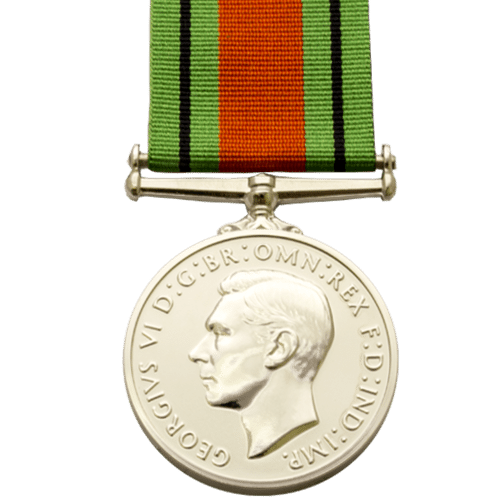
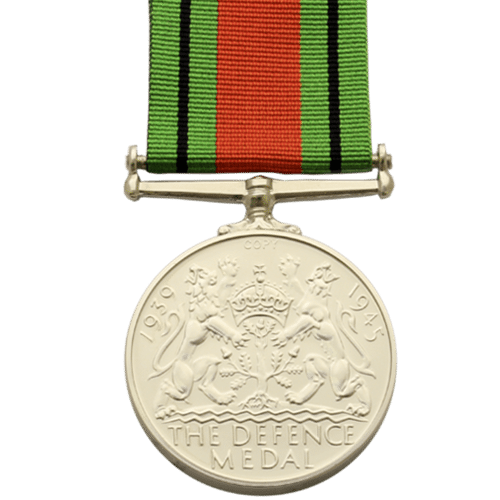
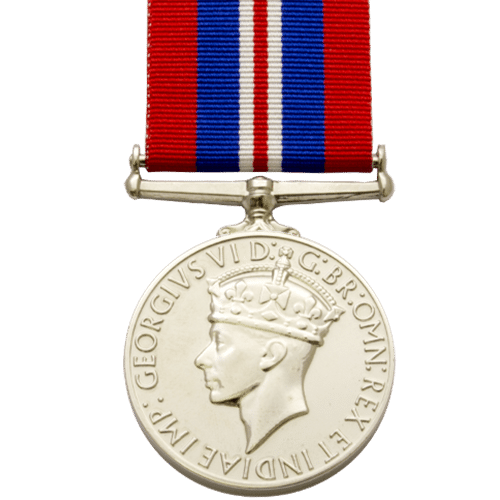
Defence Medal World War 2 was awarded to service personnel for three years’ service at home, one year’s service in a non-operational area (e.g. India) or six months’ service overseas in territories subjected to air attack or otherwise closely threatened. Personnel of Anti-Aircraft Command, RAF ground crews, Dominion forces stationed in the UK, the Home Guard, Civil Defence, National Fire Service and many other civilian units qualified for the medal. The medal was generally issued unnamed in cupro-nickel, but the Canadian version was struck in silver.
Date: 1945.
Campaign: Second World War 1939-45.
Branch of Service: British and Commonwealth forces.
Ribbon: Two broad stripes of green (this green and pleasant land) superimposed by narrow stripes of black (the black-out), with a wide stripe of orange (fire-bombing) in the centre.
Original Metal: Cupro-nickel or silver.
Size: 36mm.
Description: (Obverse) the uncrowned effigy of King George VI; (reverse) two lions flanking an oak sapling crowned with the dates at the sides and wavy lines representing the sea below. The words THE DEFENCE MEDAL appear in the exergue.
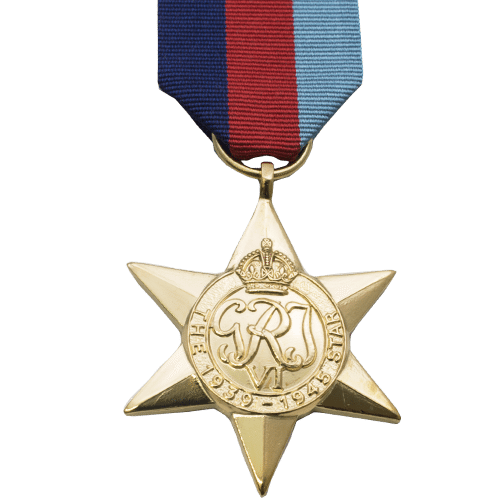
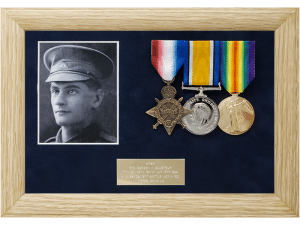 Medals are mounted ready for wear and then placed on a block within the frame. This allows for the easy removal and replacement of the medals as required, meaning they can be removed for wear on parade or for cleaning.
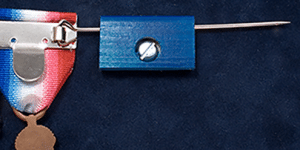 The medals will hang from the block at a slight angle much as they would if they were being worn on the chest.
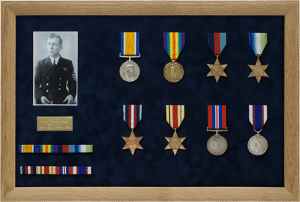 Medals are not mounted ready for wear and instead are placed flat against the frame backing with the medal ribbon secured through a slot. This means that the medals cannot be removed from the frame and cannot be worn.
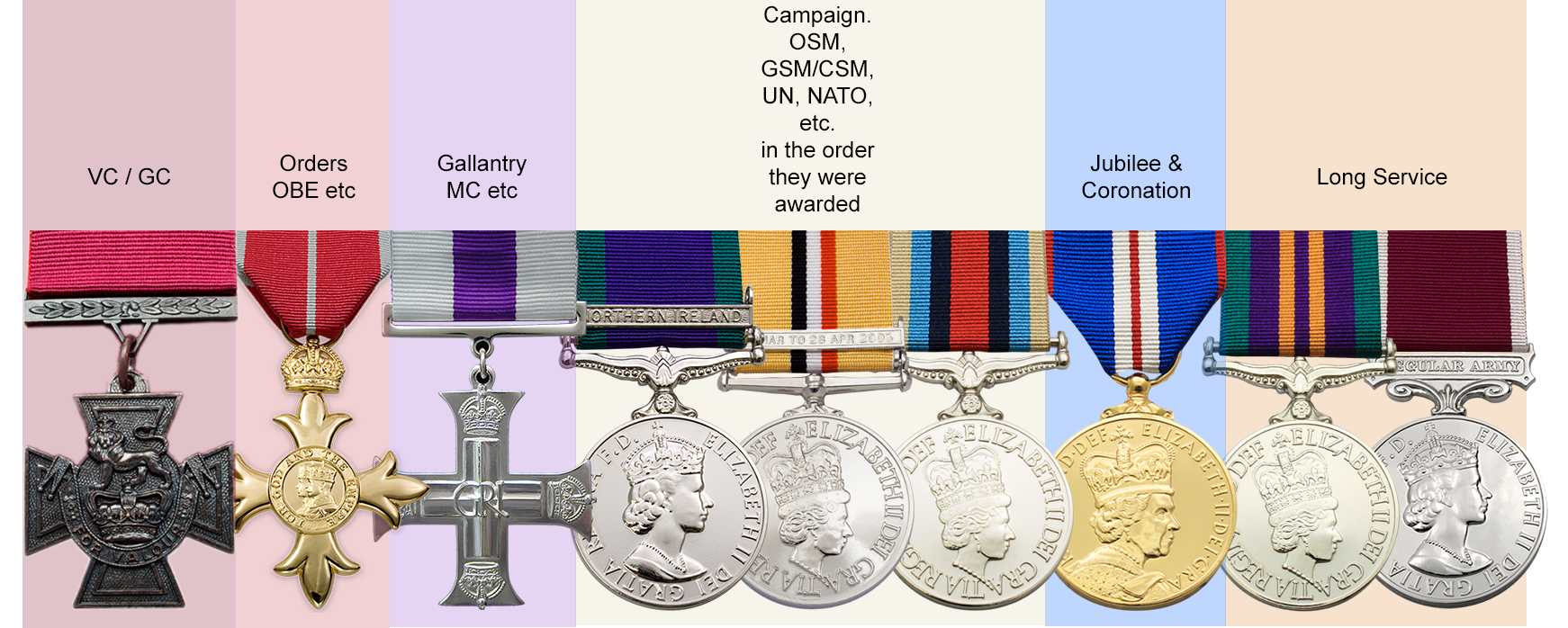
 Medal mounting swing style is the more traditional method of mounting medals. Swing Style or ordinary style mounted medals are mounted on a medal brooch bar which can then be pinned to your tunic directly, through becketts or attached to a pocket holder. This style of medal mounting allows the medals to move or ‘swing’ when worn. Over time, the edge of the medals can become damaged due to the medals “clinking” together.
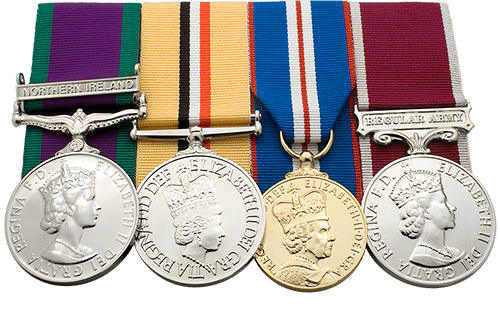 Medal mounting court style is alleged to have began during the reign of Queen Victoria. Those attending the Queen would wear medals court mounted to stop them “clinking”. Other sources suggest that the Cavalry first adopted the practice. Either way, this style of medal mounting is becoming more popular. Court mounted medals are fixed to a rigid backing material called buckram. The buckram is then covered in a felt material before the medals are mounted on their own ribbon length. This style of medal mounting holds the medals firmly in place and prevents them ‘clinking’ together and damaging each other when worn.

Sue Smith –
I ordered the defence medal for my father, this was the missing one in his set of four. By an amazing coincidence it arrived on his 93rd birthday, thank you so much you made a lovely man very happy. Super fast delivery
sam amor –
Thank you very much for your kind comments they are much appricated. I will let the rest of the team know, hope he had a good birthday!
Irene B. –
Quick response to my questions via e-mail. Ordering was easy and medal delivered when promised. Thank you for good service
Irene Bidnall –
Dad should have had four medals from his service in WW2 but this one was missing. I ordered a replacement from Canada and it was promptly shipped to my nephew in England, the keeper of these treasures.
Prompt service, quick response to my e-mails. Thank you