

Description
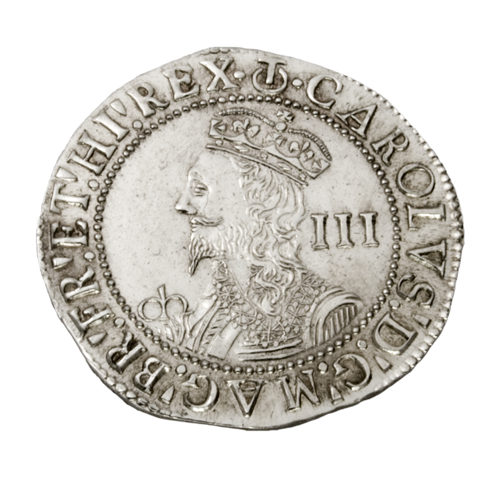
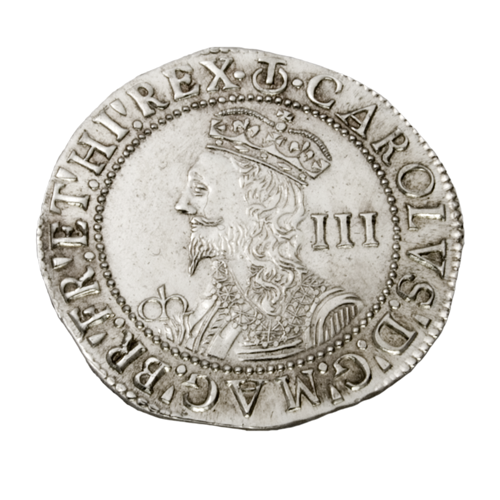
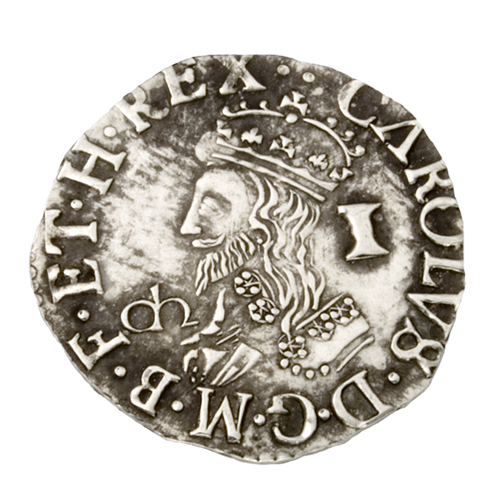
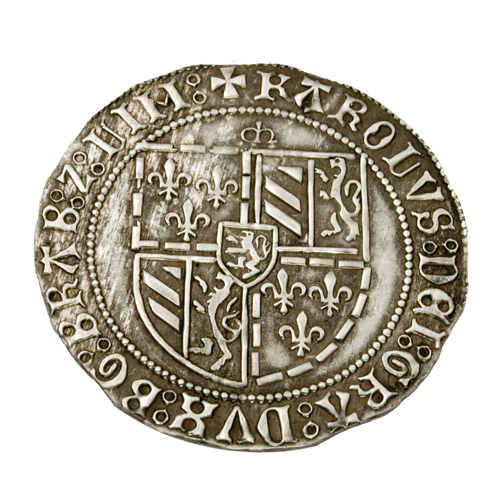
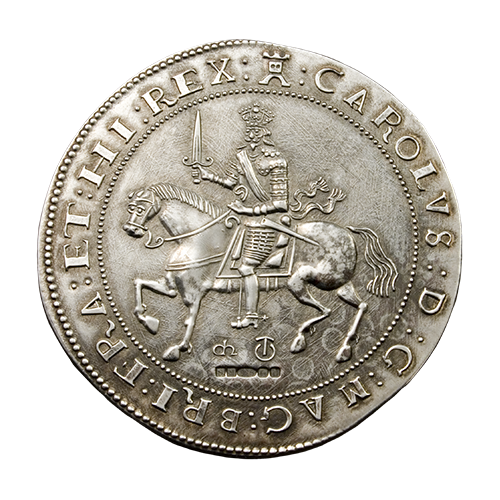
Charles I Silver Three Pence.
This coin is based on the silver coins struck at the Tower of London. The threepence was not on fact struck at the Tower but is representative and follows the design of some of the larger denominations. The value of the coins of Charles from the shilling down is indicated by the Roman numerals behind the portrait of the King. The Latin titles on the obverse or ‘Head’ side translated to read – “Charles by the Grace of God, King of Great Britian, France and Ireland” and on the reverse of a genuine coin “Christus Ausous Regno” – “I reign under the auspices of Christ”, which made clear the Stuart theory of divine rule.
Coins of this period were struck by placing a piece of silver between two dies and striking the upper die called a trussel with a heavy blow from the hammer. The lower die called a pile had a pointed end which was driven into a large block of wood. This method of producing coins often led to the silver blank spreading into an irregular shape and the coins were frequently poorly struck.
Charles who was a patron of the arts was dissatisfied with the state of the coinage and fortunately for him it was at this time that one Nicholas Briot, a Frenchman, came and settled in London, bringing with him his screwpress machine for striking coins and medals. Charles immediately set him up in the mint where he produced some of the finest examples of the English coinage.
Some coins however, were still struck by the hammer method which was infact quicker, using dies engraved by Briot.
This threepenny piece struck by the Bigbury Mint closely follows the Briot portrait and is very similar to the threepence struck at York where Briot was employed for a period during the Civil War.
At this period none of the Tower Mint coins were dated but instead were given a “Mintmark” and “Initial mark” which proceeds the title. This was changed every year and since the sequence of the marks is known coins can be dated quite accurately.
This excellent quality, semi-reproduction coin is struck in our Devon workshop.
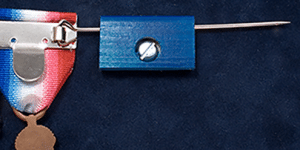
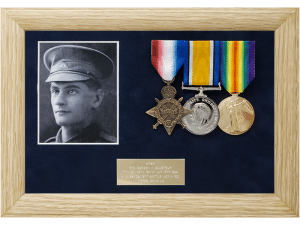 Medals are mounted ready for wear and then placed on a block within the frame. This allows for the easy removal and replacement of the medals as required, meaning they can be removed for wear on parade or for cleaning.
 The medals will hang from the block at a slight angle much as they would if they were being worn on the chest.
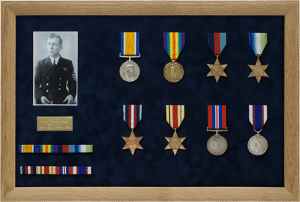 Medals are not mounted ready for wear and instead are placed flat against the frame backing with the medal ribbon secured through a slot. This means that the medals cannot be removed from the frame and cannot be worn.
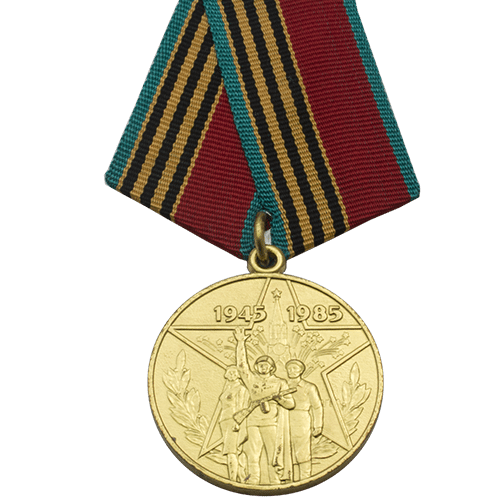
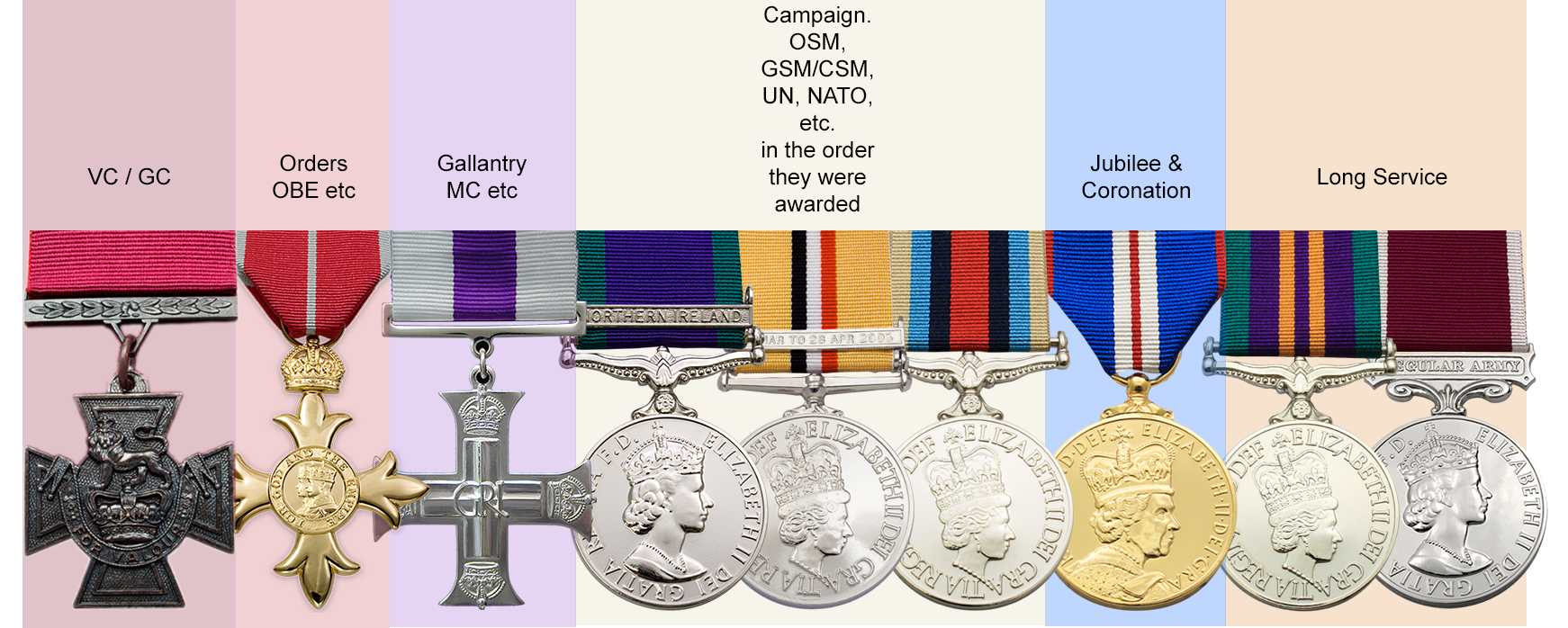
 Medal mounting swing style is the more traditional method of mounting medals. Swing Style or ordinary style mounted medals are mounted on a medal brooch bar which can then be pinned to your tunic directly, through becketts or attached to a pocket holder. This style of medal mounting allows the medals to move or ‘swing’ when worn. Over time, the edge of the medals can become damaged due to the medals “clinking” together.
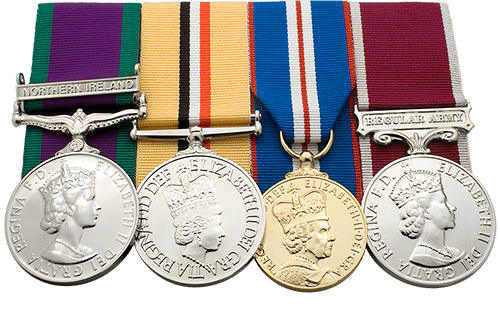 Medal mounting court style is alleged to have began during the reign of Queen Victoria. Those attending the Queen would wear medals court mounted to stop them “clinking”. Other sources suggest that the Cavalry first adopted the practice. Either way, this style of medal mounting is becoming more popular. Court mounted medals are fixed to a rigid backing material called buckram. The buckram is then covered in a felt material before the medals are mounted on their own ribbon length. This style of medal mounting holds the medals firmly in place and prevents them ‘clinking’ together and damaging each other when worn.