

Description
THE “CORNISH LAMENT”.
For over 3000 years, generations of Cornishmen have dug the gravels of remote moorlands, pursued veins of ore over the edges of towering cliffs and even tunneled beneath the very ocean itself in the search for a metal , in which Cornwall is so richly endowed, created a unique and almost instinctive skill passed traditionally from father to son. These brave people who, as mines became deeper, were shadowed by a multitude of constant life-threatening dangers that were an accepted part of life, of a tradition and a culture.
The closure of Cornwall’s last remaining tin mine – South Crofty- in 1998 is seen by many as an occasion for remorse. It is unquestionably a significant event in the history of Cornwall- seemingly an end to a traditional industry and a blow to the roots of an identity built upon a tradition of industrial prowess. The Art medal, made from pure 19th century Cornish Tin, commemorates the achievement of those people who came from what became known as the greatest hard-rock mining nation the world has ever seen.
About the medal:
Obverse.
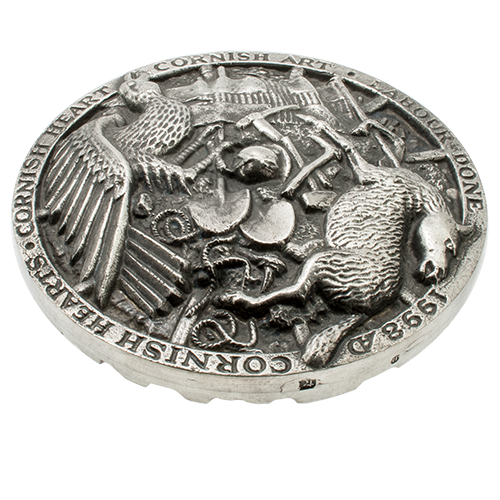
A discarded pile of tools including bronze age antler picks and the traditional iron Cornish poll pick of the industrial Revolution are finally surmounted by a helmet from South Crofty. The mine’s iconic headframe, which dominates the landscape of Cambourne and Redruth, inspired the background image of a sheave wheel whose spokes are revealed towards the rim.
Traditional symbols used by the smelters of this fine silvery metal are depicted in their final agony – The Lamb lays down the flag of St. Piran and the mythical Phoenix awaits a day when once again Cornish Tin may be worked.
Reverse.
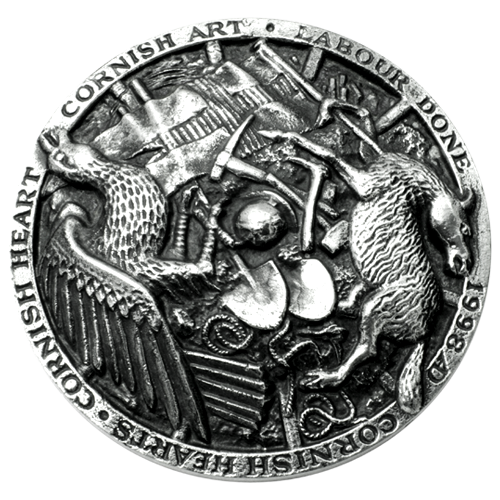
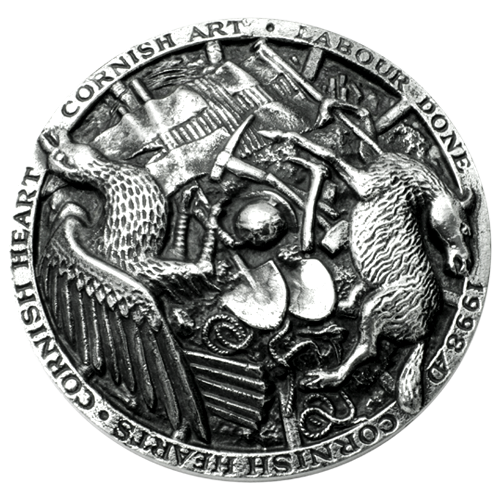
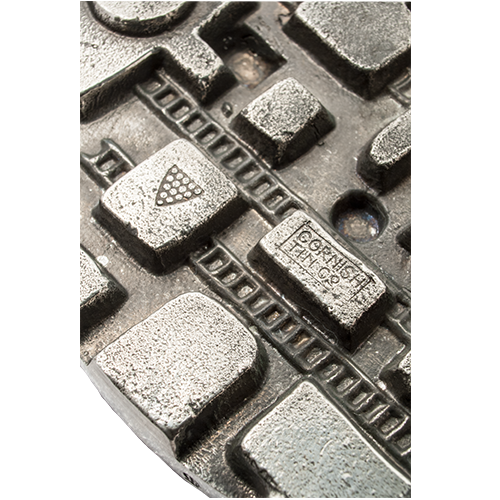
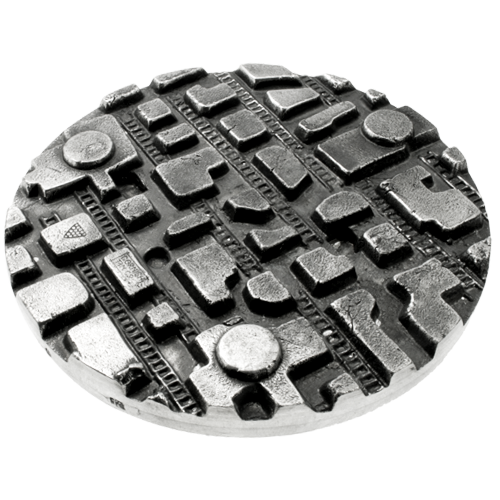
The labyrinth of shafts, tunnels and galleries of the miners’ subterranean world is represented in deeply incised relief. This is their world, a work place filled with the sounds of drilling and blasting and of voices and song. Unlike the surface remains which are eroded by time or are removed thoughtlessly in the name of development, these are the real monuments – unseen, silent and water filled – full of history.
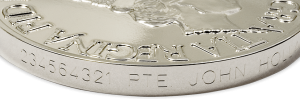
The edge is impressed with the ancient alchemist’s mark for tin, the mark of the Bigbury Mint and the serial number, while on the reverse will be found the Cornish shield and the mark of the Cornish Tin Co.
The “Cornish Lament” was designed and sculpted by David Holland and cast as a Limited edition of 500 by the Bigbury Mint.
Provenance of the Tin used to make this medal.
Ingots of tin identified by the names and symbols of their historic smelters have been recovered by divers from the sea bed beneath the Celtic Sea, some 18 miles NNW of the Cornish port of St Ives. they were part of a cargo of tin on board of the SS Cheerful when she was run down in thick fog by the Royal Naval Frigate, H.M.S. Hecla at 4am on the 20th of July 1885.
Ingots in a fine state of preservation may be seen in many museums whilst corroded ingots have been used in the process of re-melting and hand casting the medals into moulds.
Certification.
Certification is provided by Roger Penhallurick, late Senior Curator of the Royal Cornwall Museum and author of the widely acclaimed ‘Tin In Antiquity” published by The Institute of Metals.
The Presentation Case.
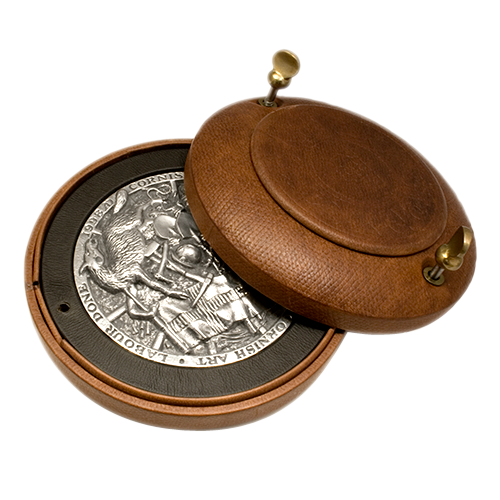
The cases are covered in fine leather, hand made as a limited edition to match the numbering of the medals. Embossed on the lid are the words “Sten Kernewek” which translates as ” Cornish Tin” in the Cornish language.
Tucked behind the leather strap in the lid of the box are copies of the original newspaper reporting the loss of the SS Cheerful, with another reporting the closure of Britains last working tin mine – South Crofty in 1998.
Art Medals
Art medals are an affordable and accessible miniature form that has been popular in Italy, France and Eastern Europe for centuries but which is now enjoying a wider appreciation in Britain and America.
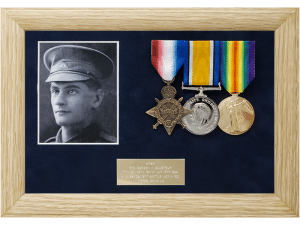 Medals are mounted ready for wear and then placed on a block within the frame. This allows for the easy removal and replacement of the medals as required, meaning they can be removed for wear on parade or for cleaning.
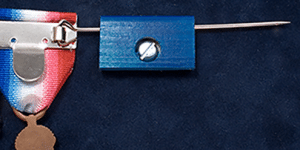 The medals will hang from the block at a slight angle much as they would if they were being worn on the chest.
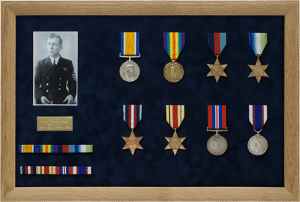 Medals are not mounted ready for wear and instead are placed flat against the frame backing with the medal ribbon secured through a slot. This means that the medals cannot be removed from the frame and cannot be worn.
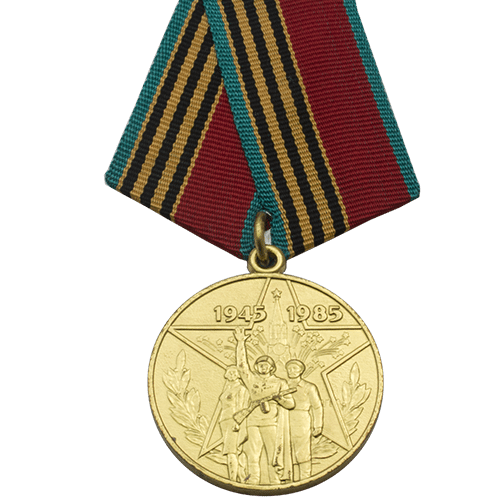
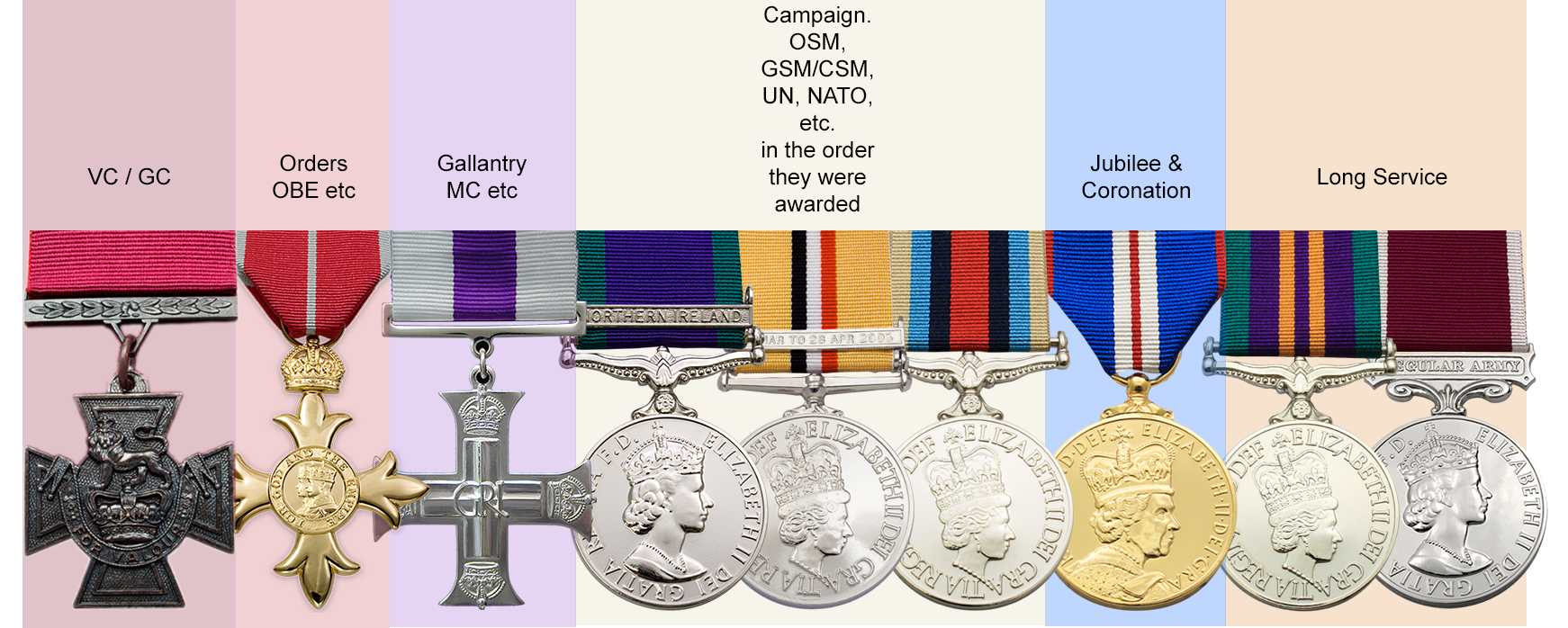
 Medal mounting swing style is the more traditional method of mounting medals. Swing Style or ordinary style mounted medals are mounted on a medal brooch bar which can then be pinned to your tunic directly, through becketts or attached to a pocket holder. This style of medal mounting allows the medals to move or ‘swing’ when worn. Over time, the edge of the medals can become damaged due to the medals “clinking” together.
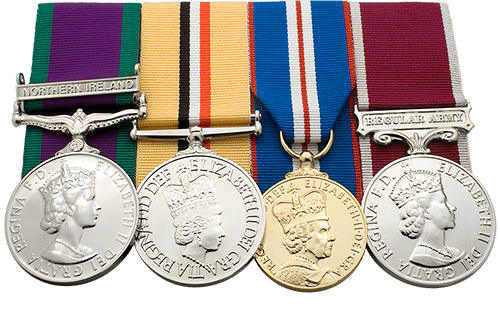 Medal mounting court style is alleged to have began during the reign of Queen Victoria. Those attending the Queen would wear medals court mounted to stop them “clinking”. Other sources suggest that the Cavalry first adopted the practice. Either way, this style of medal mounting is becoming more popular. Court mounted medals are fixed to a rigid backing material called buckram. The buckram is then covered in a felt material before the medals are mounted on their own ribbon length. This style of medal mounting holds the medals firmly in place and prevents them ‘clinking’ together and damaging each other when worn.