

Description
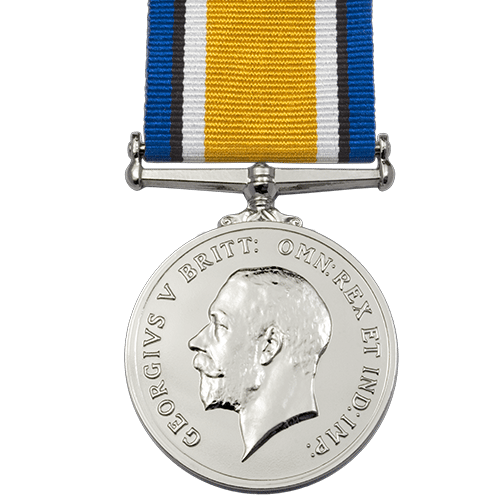
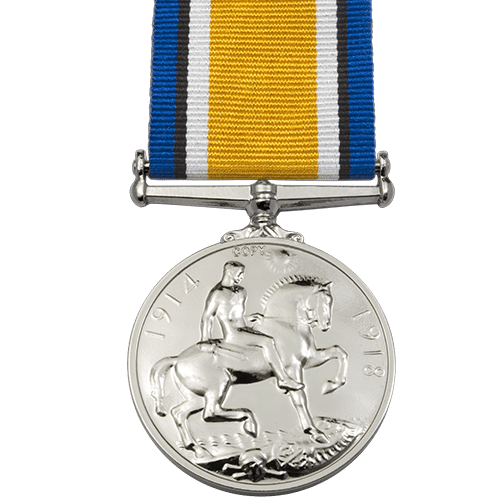
British War Medal BWM World War 1 Medal Miniature
Date: 1919
Branch of Service: British and imperial forces.
This medal was instituted to record the successful conclusion of the First World War, but it was later extended to cover the period 1919–20 and service in mine-clearing at sea as well as participation in operations in North and South Russia, the eastern Baltic, Siberia, the Black Sea and Caspian.
Ribbon: Orange watered centre with stripes of white and black at each side and borders of royal blue.
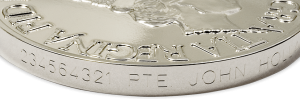
Description: (Obverse) the uncrowned left-facing profile of King George V by Sir Bertram Mackennal. (Reverse) St George on horseback trampling underfoot the eagle shield of the Central Powers and a skull and cross-bones, the emblems of death. Above, the sun has risen in victory. The figure is mounted on horseback to symbolise man’s mind controlling a force of greater strength than his own, and thus alludes to the scientific and mechanical appliances which helped to win the war.
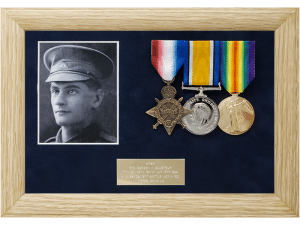 Medals are mounted ready for wear and then placed on a block within the frame. This allows for the easy removal and replacement of the medals as required, meaning they can be removed for wear on parade or for cleaning.
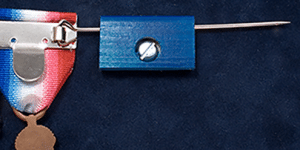 The medals will hang from the block at a slight angle much as they would if they were being worn on the chest.
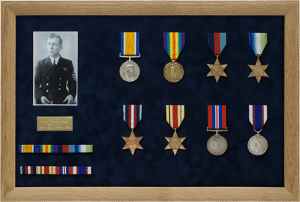 Medals are not mounted ready for wear and instead are placed flat against the frame backing with the medal ribbon secured through a slot. This means that the medals cannot be removed from the frame and cannot be worn.
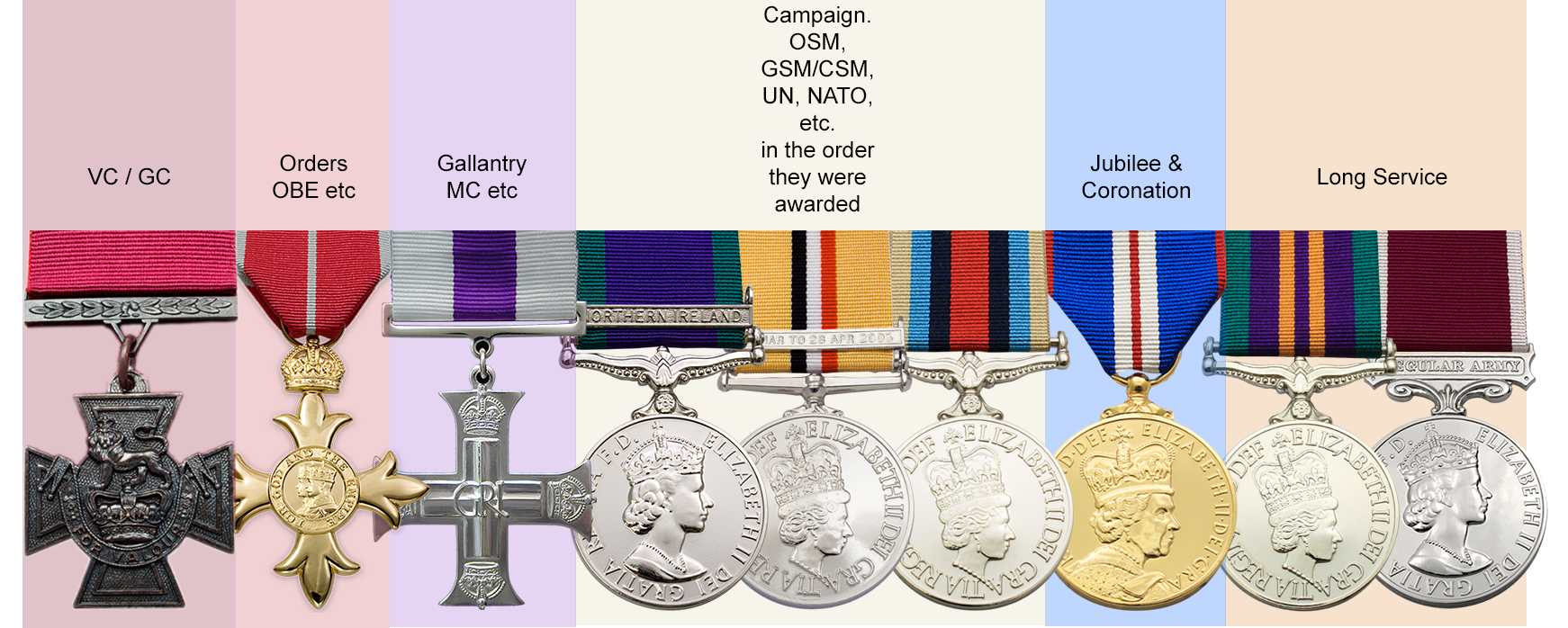
 Medal mounting swing style is the more traditional method of mounting medals. Swing Style or ordinary style mounted medals are mounted on a medal brooch bar which can then be pinned to your tunic directly, through becketts or attached to a pocket holder. This style of medal mounting allows the medals to move or ‘swing’ when worn. Over time, the edge of the medals can become damaged due to the medals “clinking” together.
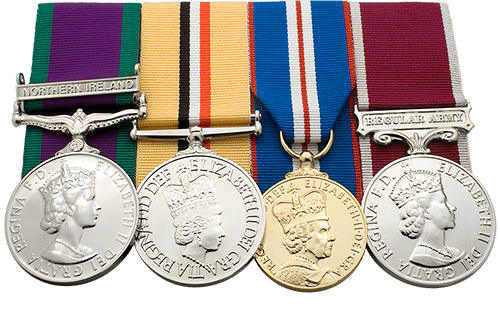 Medal mounting court style is alleged to have began during the reign of Queen Victoria. Those attending the Queen would wear medals court mounted to stop them “clinking”. Other sources suggest that the Cavalry first adopted the practice. Either way, this style of medal mounting is becoming more popular. Court mounted medals are fixed to a rigid backing material called buckram. The buckram is then covered in a felt material before the medals are mounted on their own ribbon length. This style of medal mounting holds the medals firmly in place and prevents them ‘clinking’ together and damaging each other when worn.

Reviews
There are no reviews yet.