

Description
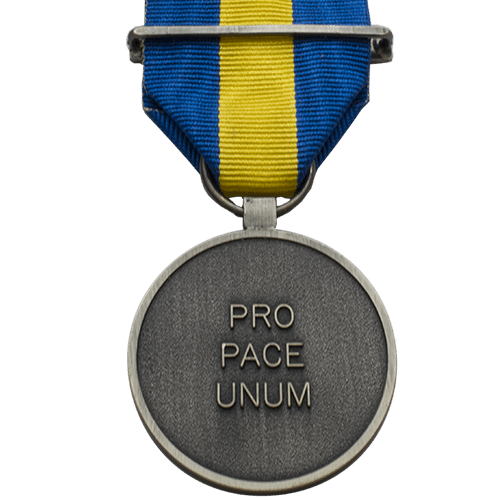
Common Security Defence Policy Medal CSDP ESDP Miniature.
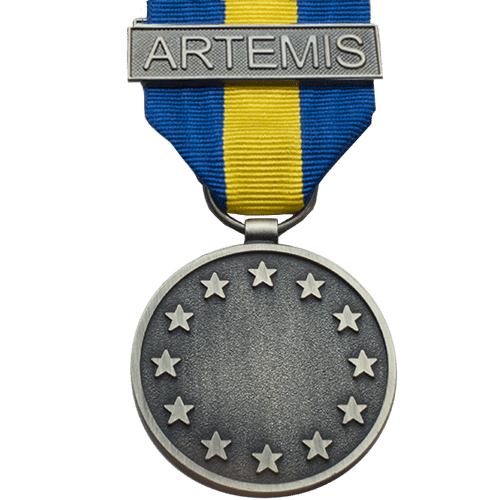
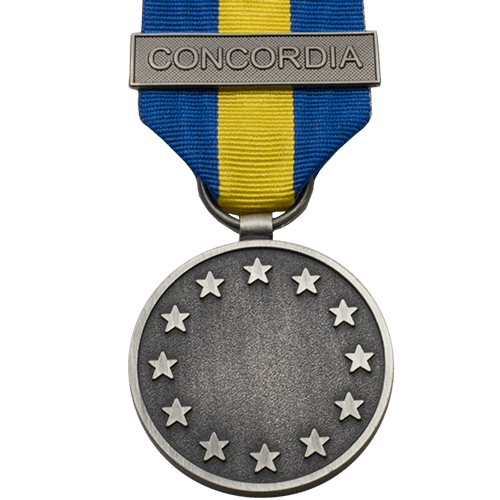
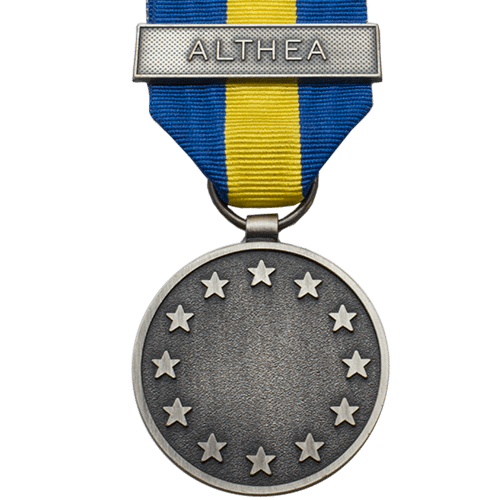
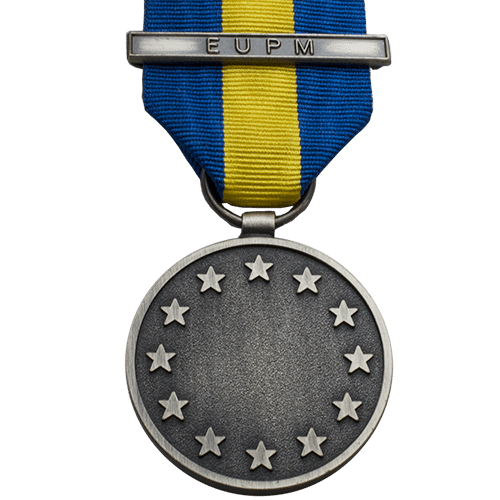
Common Security Defence Policy Medal CSDP ESDP Miniature is awarded for military operations involving the European Union and is also known as the European Security Defence Policy Medal
Date: 2004.
Campaigns: Any military operations involving the European Union.
Branch of Service: Police.
Ribbon: Bright blue with central yellow stripe with an emblem denoting area of service.
Description: (Obverse) Twelve five pointed stars in a circle; (reverse) PRO PACE UNUM in three lines (roughly translated as “United for peace”). The medal is fitted with a large ring for suspension. A clasp signifying the area of service is worn on the ribbon.
Further Information – Current EU Missions and Operations
This medal has been awarded to police and security personnel serving in any military operation under the auspices of the European Union. It has also been awarded to civilian police missions, as well as Canadian personnel (2005). The clasps denote service in the Democratic Republic of Congo from June to September 2003 (Artemis), with the EU Police mission in Bosnia since January 2003, for service in the former Yugoslav republic of Macedonia from March to December 2003 (Concordia) or December 2003 to December 2004 (Proxima), service in Bosnia since December 2004 (Althea) and service in Afghanistan since June 2007. Those serving more than one tour of duty are authorised to wear an arabic numeral on their ribbon to indicate this. Service for these medal(s) does not count as qualifying service towards the accumulated Campaign Service Medal. The ESDP Medal with clasp Althea has been approved for unrestricted acceptance and wearing by UK personnel—headquarters and units serving in Bosnia and Herzegovina, on this operation. The ESDP medal for planning and support for Operation Althea is not approved for acceptance or wear. Those presented may be retained as a keepsake.
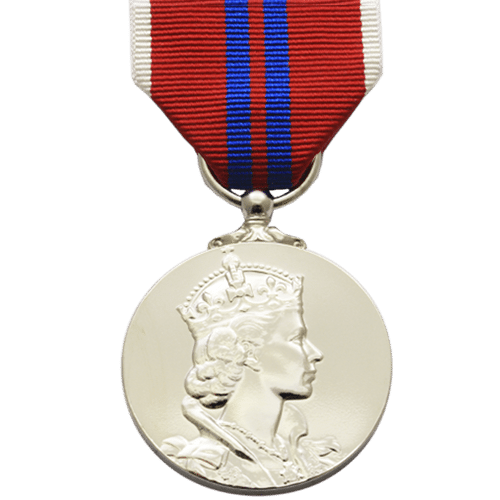
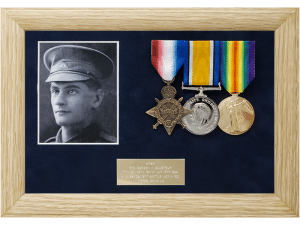 Medals are mounted ready for wear and then placed on a block within the frame. This allows for the easy removal and replacement of the medals as required, meaning they can be removed for wear on parade or for cleaning.
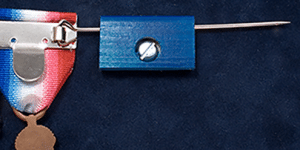 The medals will hang from the block at a slight angle much as they would if they were being worn on the chest.
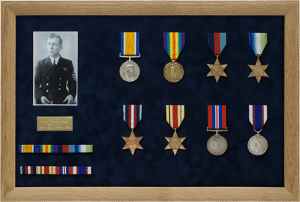 Medals are not mounted ready for wear and instead are placed flat against the frame backing with the medal ribbon secured through a slot. This means that the medals cannot be removed from the frame and cannot be worn.
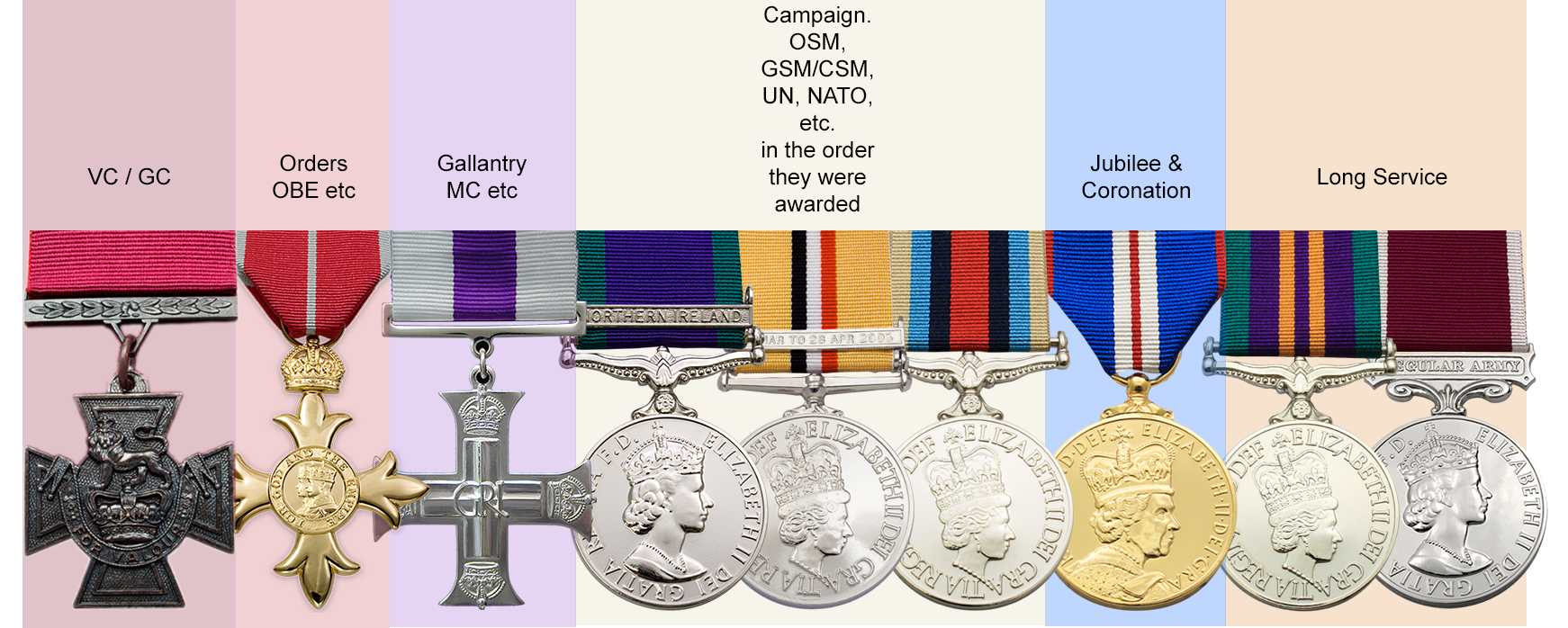
 Medal mounting swing style is the more traditional method of mounting medals. Swing Style or ordinary style mounted medals are mounted on a medal brooch bar which can then be pinned to your tunic directly, through becketts or attached to a pocket holder. This style of medal mounting allows the medals to move or ‘swing’ when worn. Over time, the edge of the medals can become damaged due to the medals “clinking” together.
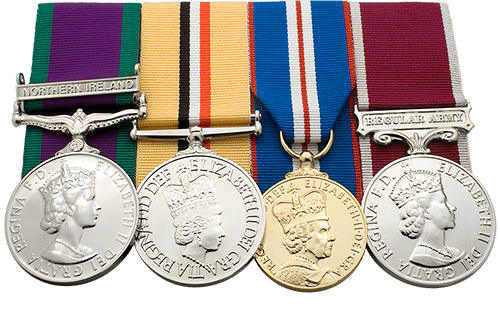 Medal mounting court style is alleged to have began during the reign of Queen Victoria. Those attending the Queen would wear medals court mounted to stop them “clinking”. Other sources suggest that the Cavalry first adopted the practice. Either way, this style of medal mounting is becoming more popular. Court mounted medals are fixed to a rigid backing material called buckram. The buckram is then covered in a felt material before the medals are mounted on their own ribbon length. This style of medal mounting holds the medals firmly in place and prevents them ‘clinking’ together and damaging each other when worn.
Reviews
There are no reviews yet.