
Description
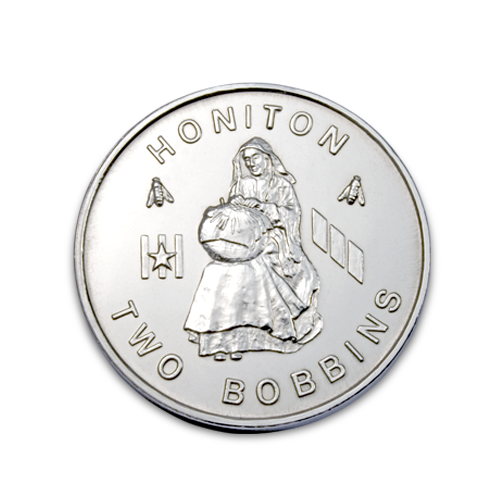
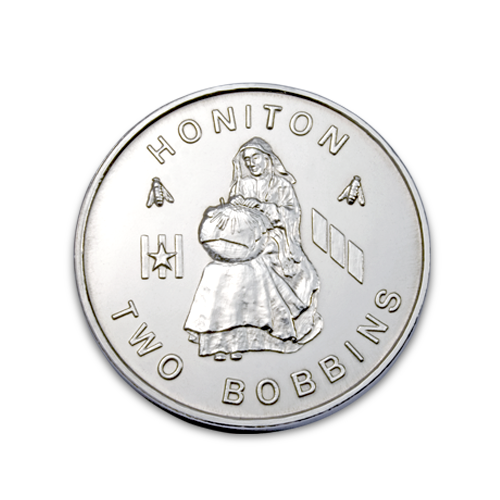
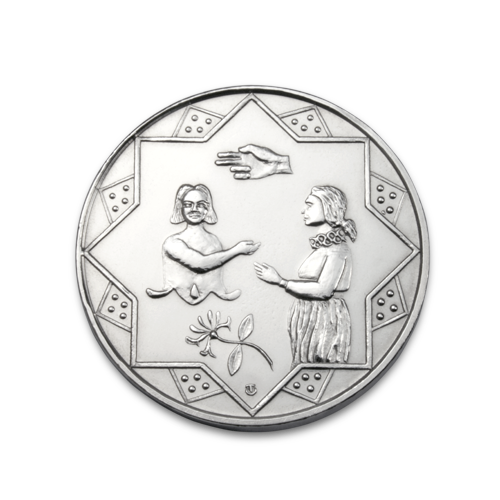
The Honiton Two Bobbin Town Coin.
This is one of a range of ‘Town Coins’ made by Bigbury Mint. They are made as fictitious currency or tokens of Devon Towns, local to where the Mint exists. The coins can be bought to give as gifts, made into jewellery, or used as tokens. If your town (wherever in the world) would like to commission us to make a ‘coin’, please contact us.
The Honiton Two Bobbin Piece. 27mm diameter nickel-silver.
The obverse shows a lady in traditional dress making the famous ‘Honiton Lace’. It also shows some honey bees from which the Town gets its name. The other two symbols are from its Twin Towns; Mézidon-Canon in France and Gronau (Leine) in Germany.
The reverse of the coin of the medal shows the curious town crest which includes a pregnant woman and a young man. The hand is possibly a religious symbol and the honeysuckle is a punning allusion to the name Honiton. The small central mark at the bottom is the Bigbury Mint ‘Mint Mark’
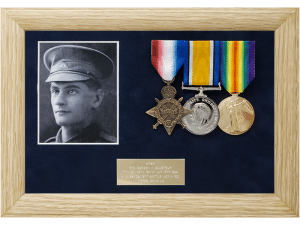 Medals are mounted ready for wear and then placed on a block within the frame. This allows for the easy removal and replacement of the medals as required, meaning they can be removed for wear on parade or for cleaning.
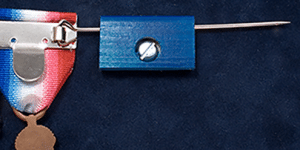 The medals will hang from the block at a slight angle much as they would if they were being worn on the chest.
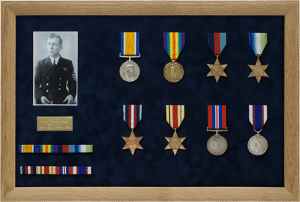 Medals are not mounted ready for wear and instead are placed flat against the frame backing with the medal ribbon secured through a slot. This means that the medals cannot be removed from the frame and cannot be worn.
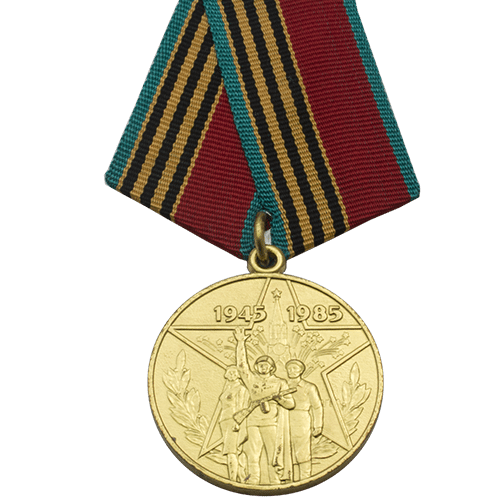
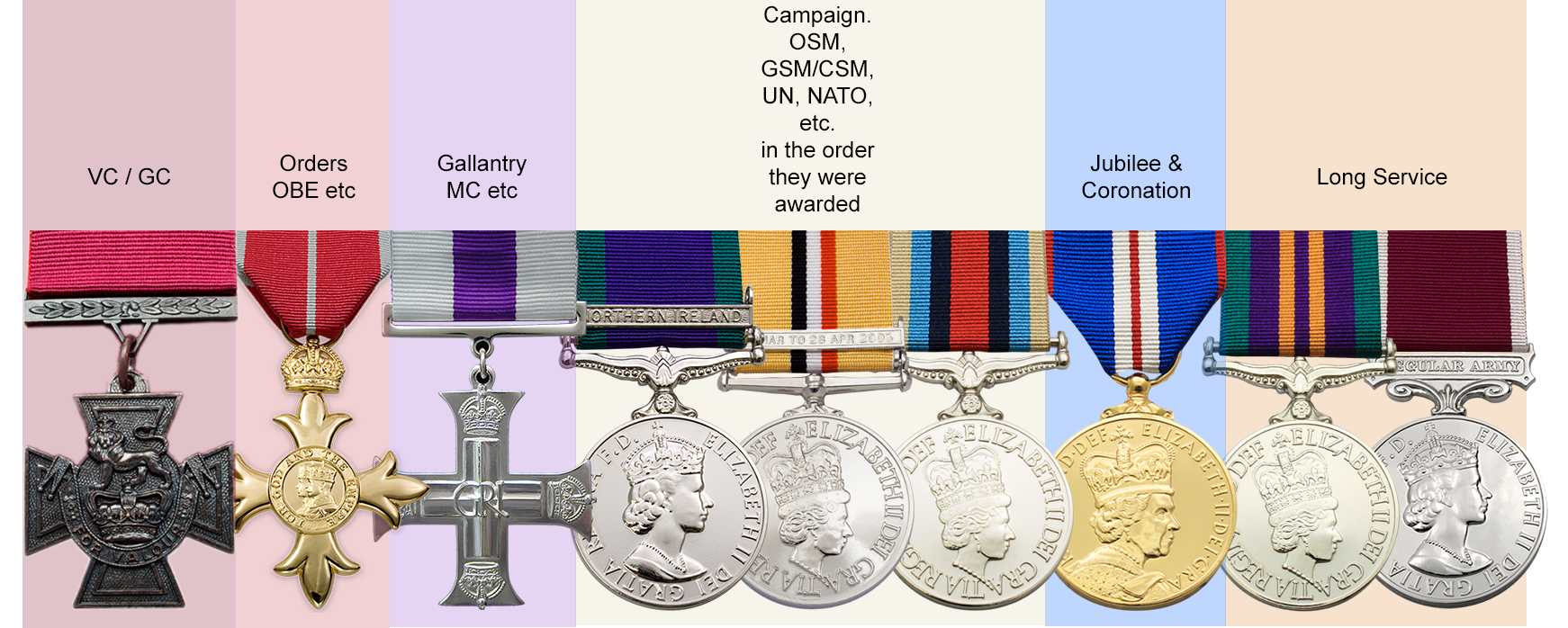
 Medal mounting swing style is the more traditional method of mounting medals. Swing Style or ordinary style mounted medals are mounted on a medal brooch bar which can then be pinned to your tunic directly, through becketts or attached to a pocket holder. This style of medal mounting allows the medals to move or ‘swing’ when worn. Over time, the edge of the medals can become damaged due to the medals “clinking” together.
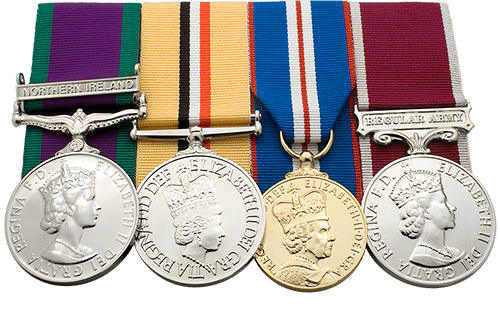 Medal mounting court style is alleged to have began during the reign of Queen Victoria. Those attending the Queen would wear medals court mounted to stop them “clinking”. Other sources suggest that the Cavalry first adopted the practice. Either way, this style of medal mounting is becoming more popular. Court mounted medals are fixed to a rigid backing material called buckram. The buckram is then covered in a felt material before the medals are mounted on their own ribbon length. This style of medal mounting holds the medals firmly in place and prevents them ‘clinking’ together and damaging each other when worn.