
Description
Aethelstan Saxon Silver Penny.
Aethelstan, the son of Edward the elder and grandson of Alfred the great was born in 895.
On the death of Edward in 924 Aethelstan became King of the Mercians and West Saxons and was crowned at Kingston in Surrey.
In 927 he invaded the Danish dominions in Northumbria and drove out GUTHFRITH the ruler, and took possession of his territories, later he fixed the boundries of Wales and Cornwall at the rivers Wye and Tamar thus establishing himself as the virtual King of all England.
In 937 ANLAF, a Danish chief, together with the King of Scotland and the Welsh invaded England, but were defeated by Aethelstan and his half – brother Edmund at the battle of BRUNANBURH.
England prospered under Aethelstan who paid much attention to the interests of his people and his power was much respected on the Continent.
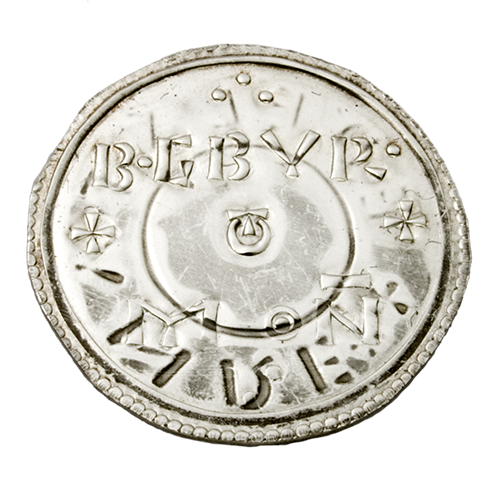
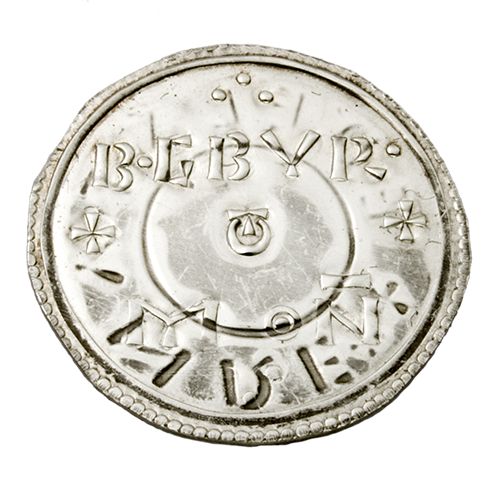
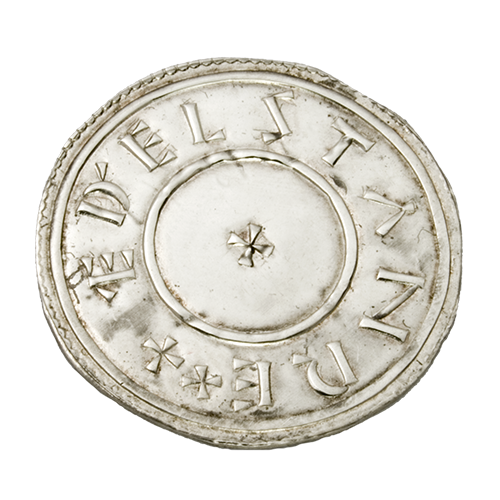
The coins of Aethelstan fall into two main types. The first, called the small cross type, displays on the obverse a small cross within an inner circle and carries the title ADELSTAN REX and it is interesting to note the saxon symbol D = TH. On the reverse is the moneyers name in two lines. This is the type chosen by the Bigbury Mint to represent a coin of Aethelstan and carries the name of the mint on the reverse – B GBYR MONE – Bigbury moneyer. The coin is struck in sterling silver from hand engraved dies.
The other main type of Aethelstan’s coinage is of the portrait type which displays a very presentable portrait for the period.
The earliest surviving law relating to the coinage was issued by Aethelstan in 928. Called the Grateley Decrees it ordered that there was to be one coinage all over the Kings dominions and a strict rule that no-one was to mint money except in a town or borough – Mints were set up and a large number of moneyers are recorded striking coins for Aethelstan.
Although halfpennies were struck for some of Aethelstan’s predecessors none have been recorded for Aethelstan. Halfpennies from this period are very rare and were probably not struck in any numbers. The usual practice was to cut pence into halves and quarters to facilitate change.
This excellent quality, semi-reproduction coin is struck in our Devon workshop.
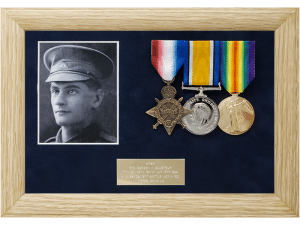 Medals are mounted ready for wear and then placed on a block within the frame. This allows for the easy removal and replacement of the medals as required, meaning they can be removed for wear on parade or for cleaning.
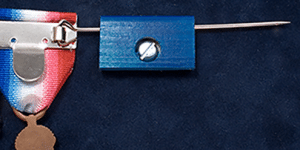 The medals will hang from the block at a slight angle much as they would if they were being worn on the chest.
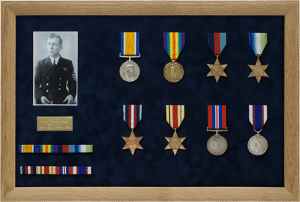 Medals are not mounted ready for wear and instead are placed flat against the frame backing with the medal ribbon secured through a slot. This means that the medals cannot be removed from the frame and cannot be worn.
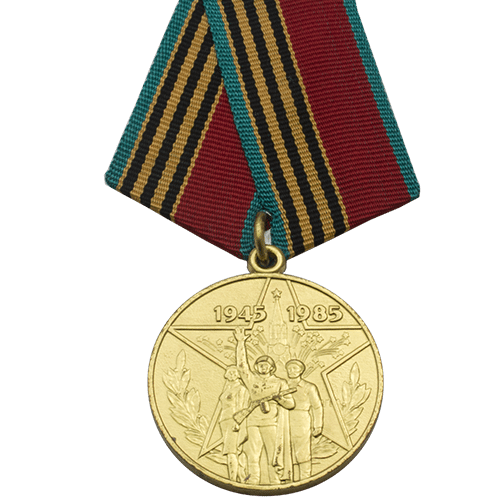
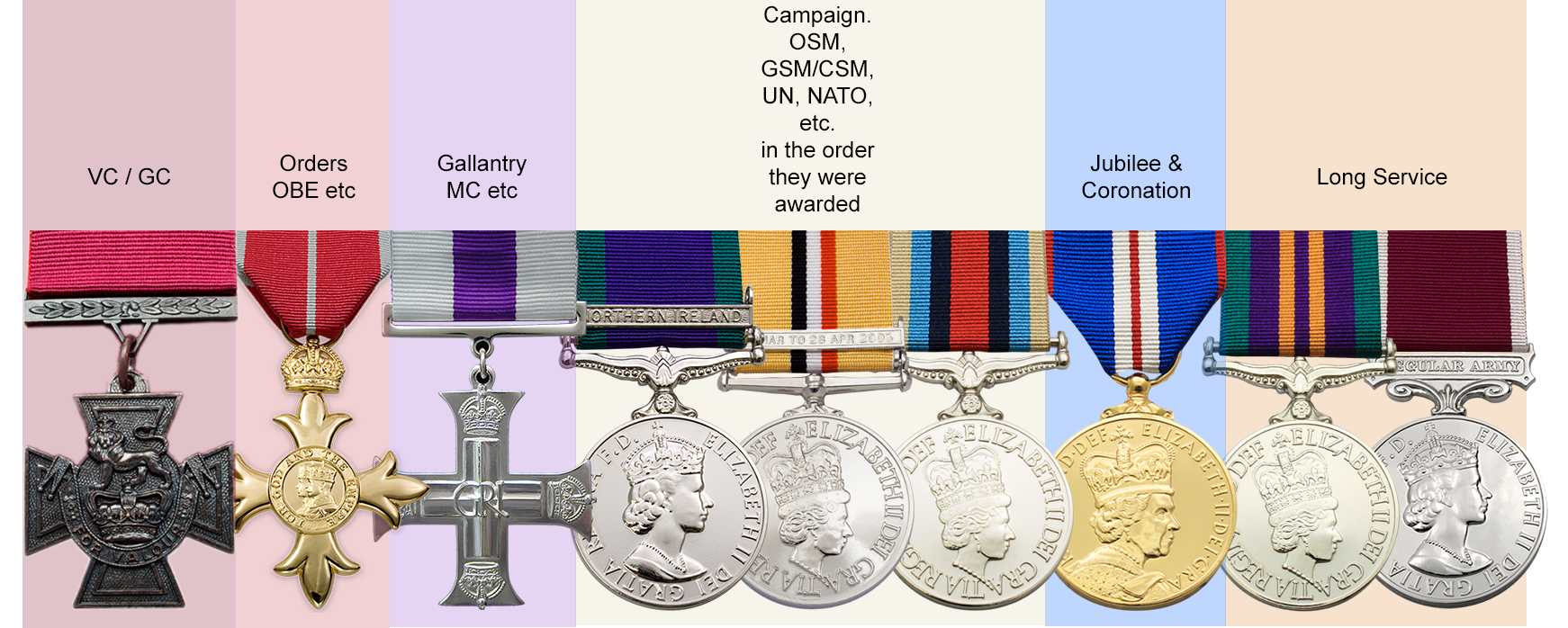
 Medal mounting swing style is the more traditional method of mounting medals. Swing Style or ordinary style mounted medals are mounted on a medal brooch bar which can then be pinned to your tunic directly, through becketts or attached to a pocket holder. This style of medal mounting allows the medals to move or ‘swing’ when worn. Over time, the edge of the medals can become damaged due to the medals “clinking” together.
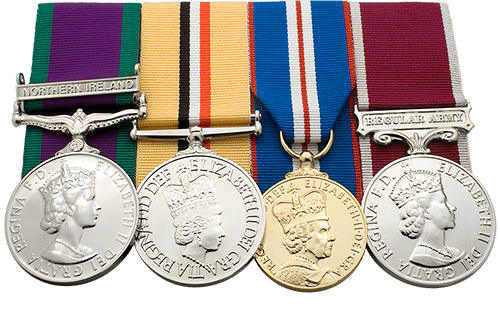 Medal mounting court style is alleged to have began during the reign of Queen Victoria. Those attending the Queen would wear medals court mounted to stop them “clinking”. Other sources suggest that the Cavalry first adopted the practice. Either way, this style of medal mounting is becoming more popular. Court mounted medals are fixed to a rigid backing material called buckram. The buckram is then covered in a felt material before the medals are mounted on their own ribbon length. This style of medal mounting holds the medals firmly in place and prevents them ‘clinking’ together and damaging each other when worn.