


Description
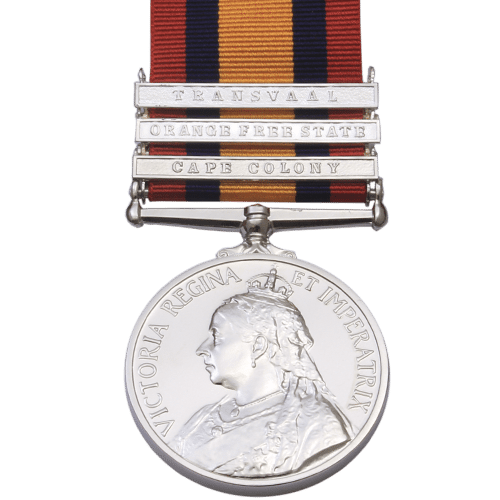
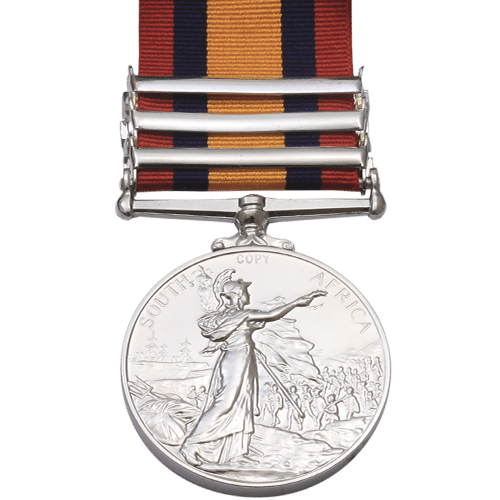
Queens South Africa Medal QSA Full Size
The Queens South Africa Medal is awarded for service in South Africa in the Anglo-Boer War 1899-1902. A total of 26 clasps were issued for this medal indicating either the state or the battle.
Date: 1899
Branch of Service: British and Imperial Forces
Date instituted: 1899.
Campaign: Anglo-Boer War 1899-1902.
Ribbon: Red with two narrow blue stripes and a broad central orange stripe.
Original Metal: Silver or bronze.
Size: 36mm.
Description: (Obverse) the Jubilee bust of Queen Victoria; (reverse) Britannia holding the flag and a laurel crown towards a large group of soldiers, with warships offshore. The words SOUTH AFRICA are inscribed round the top.
Because of the large number of British and imperial forces which took part and the numerous campaign and battle clasps awarded, the Queens South Africa medal is one of the most popular and closely studied of all medals, offering immense scope to the collector. A total of 178,000 medals were awarded. Numerous specialist units were involved for the first time, as well as locally raised units and contingents from India, Canada, Australia and New Zealand. Of particular interest are the medals awarded to war correspondents and nurses which set precedents for later wars. Although nurses received the medal they were not issued with clasps to which they were entitled. A small number of bronze medals without a clasp were issued to bearers and servants in Indian units. The original issue of the QSA depicts Britannia’s outstretched hand pointing towards the R of AFRICA and bears the dates 1899–1900 on the reverse field. Less than 70 of these were issued to Lord Strathcona’s Horse who had returned to Canada before the war ended, but as the war dragged on the date was removed before any other medals were issued, although some medals can be found with a “ghost” of this date still to be seen. On the third type reverse there is again no date but Britannia’s hand points towards the F. Some clasps are much scarcer when issued singly than combined with other clasps and conversely some clasps are not recorded on their own. Verified ten-clasp medals to South African units are known.
Clasps: 26 authorised but the maximum recorded for a single medal is nine to the Army and eight to the Navy.
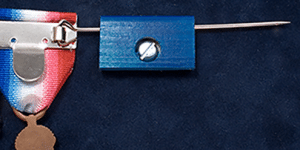
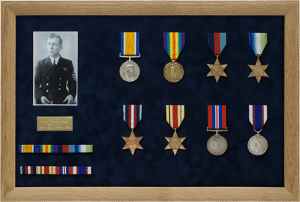
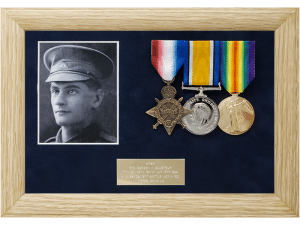 Medals are mounted ready for wear and then placed on a block within the frame. This allows for the easy removal and replacement of the medals as required, meaning they can be removed for wear on parade or for cleaning.
 The medals will hang from the block at a slight angle much as they would if they were being worn on the chest.
 Medals are not mounted ready for wear and instead are placed flat against the frame backing with the medal ribbon secured through a slot. This means that the medals cannot be removed from the frame and cannot be worn.
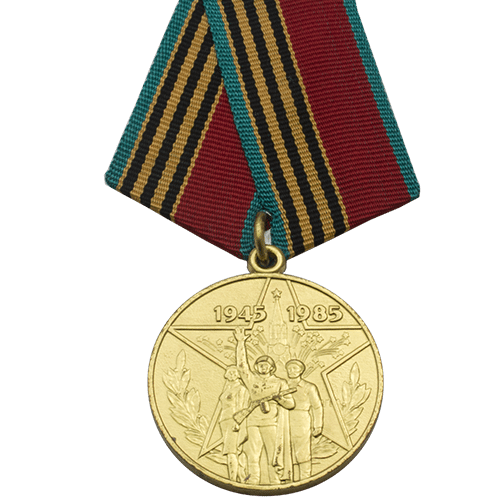
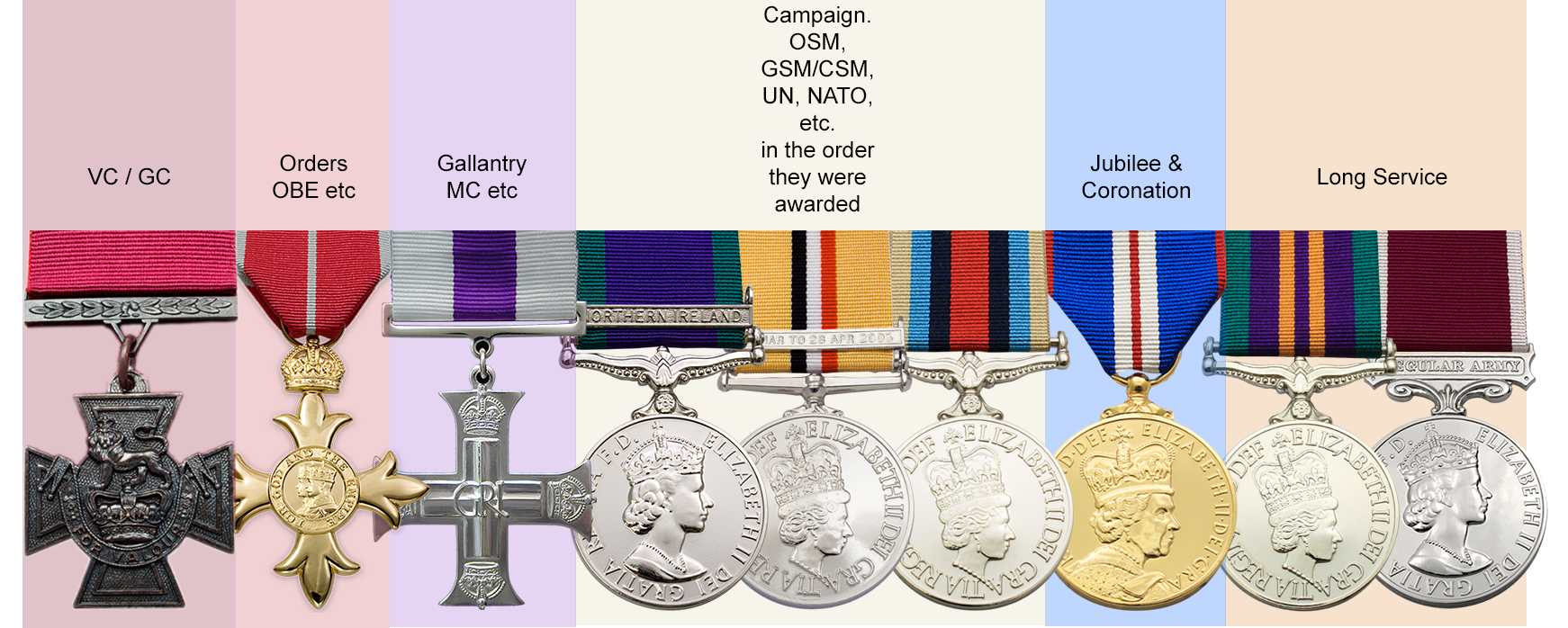
 Medal mounting swing style is the more traditional method of mounting medals. Swing Style or ordinary style mounted medals are mounted on a medal brooch bar which can then be pinned to your tunic directly, through becketts or attached to a pocket holder. This style of medal mounting allows the medals to move or ‘swing’ when worn. Over time, the edge of the medals can become damaged due to the medals “clinking” together.
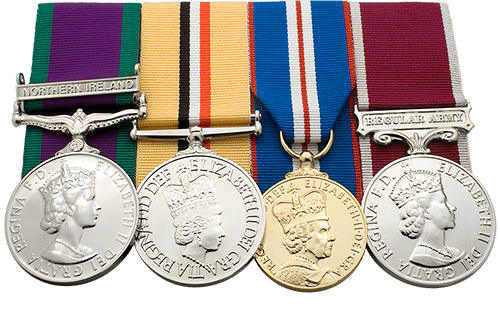 Medal mounting court style is alleged to have began during the reign of Queen Victoria. Those attending the Queen would wear medals court mounted to stop them “clinking”. Other sources suggest that the Cavalry first adopted the practice. Either way, this style of medal mounting is becoming more popular. Court mounted medals are fixed to a rigid backing material called buckram. The buckram is then covered in a felt material before the medals are mounted on their own ribbon length. This style of medal mounting holds the medals firmly in place and prevents them ‘clinking’ together and damaging each other when worn.
Reviews
There are no reviews yet.