

Description
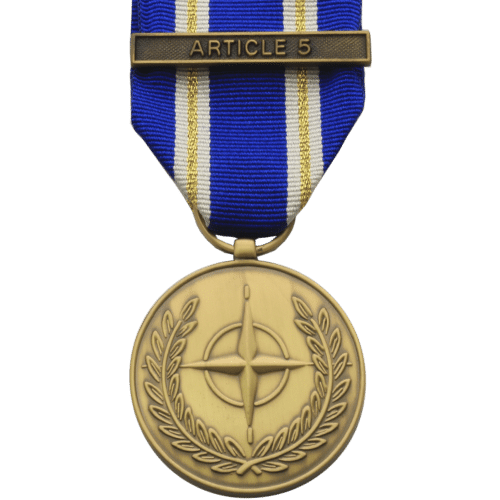
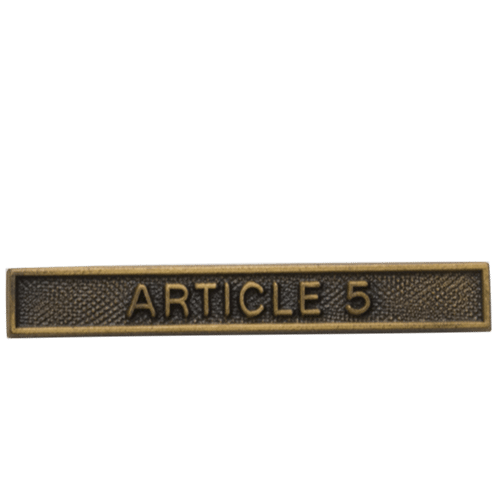
NATO Article 5 Active Endeavour Medal Full Size.
Date: 2001 – 2002
Branch of Service: Personnel serving under Nato command
Awarded for thirty days continuous or accumulated service as part of an element of the Standing Naval Force (SNF) operating in the international waters of the Mediterranean Sea and in the air space above it commencing 26th October 2001.
Permission has not been granted to UK personnel to wear this medal.
Takes similar precedence to the General Service Medal or other campaign medals, in chronological order of award.
Numerals worn on the ribbon denote multiple tours. Please note that since 2003 MID, QCB, QCBA and QCVS’s may be worn on NATO, UN and European Community & Union medals.
Instituted: December 1994.
Campaigns: Any theatre or area of operations in the service of the North Atlantic Treaty Organization.
Branch of Service: NATO military and service personnel.
Generic Ribbon: NATO blue with narrow white stripes having central metal threads.
Specific Ribbon: For engagements in NATO-led Article 5 operations (gold thread): Eagle Assist (central stripe), Active Endeavour (two stripes towards the edges), Non-Article 5 (central stripe with silver thread, from January 2011 two stripes towards the edges with silver thread denote operations) with clasps.
Description: (Obverse) the NATO star emblem set in a wreath of olive leaves;
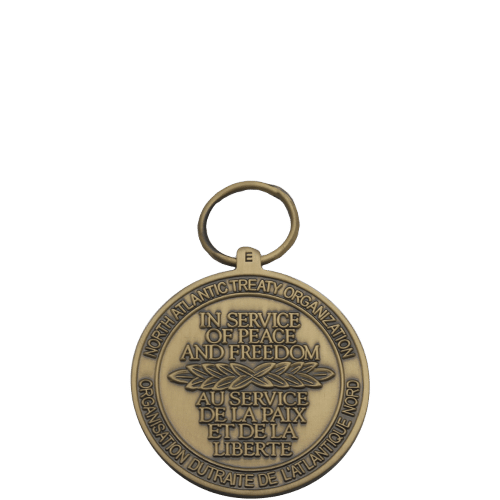
(reverse) the title NORTH ATLANTIC TREATY ORGANIZATION and the words IN SERVICE OF PEACE AND FREEDOM in English and French.
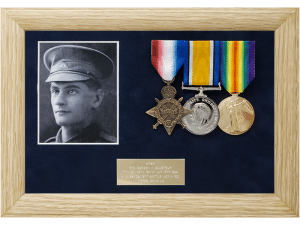 Medals are mounted ready for wear and then placed on a block within the frame. This allows for the easy removal and replacement of the medals as required, meaning they can be removed for wear on parade or for cleaning.
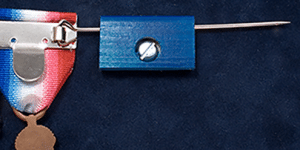 The medals will hang from the block at a slight angle much as they would if they were being worn on the chest.
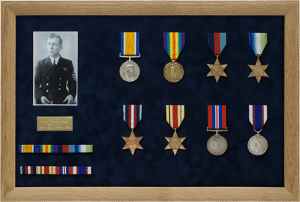 Medals are not mounted ready for wear and instead are placed flat against the frame backing with the medal ribbon secured through a slot. This means that the medals cannot be removed from the frame and cannot be worn.
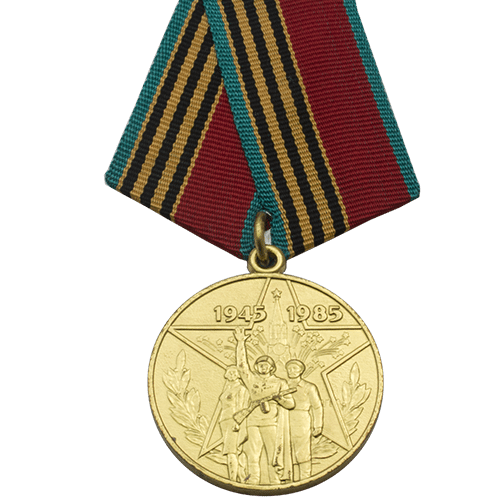
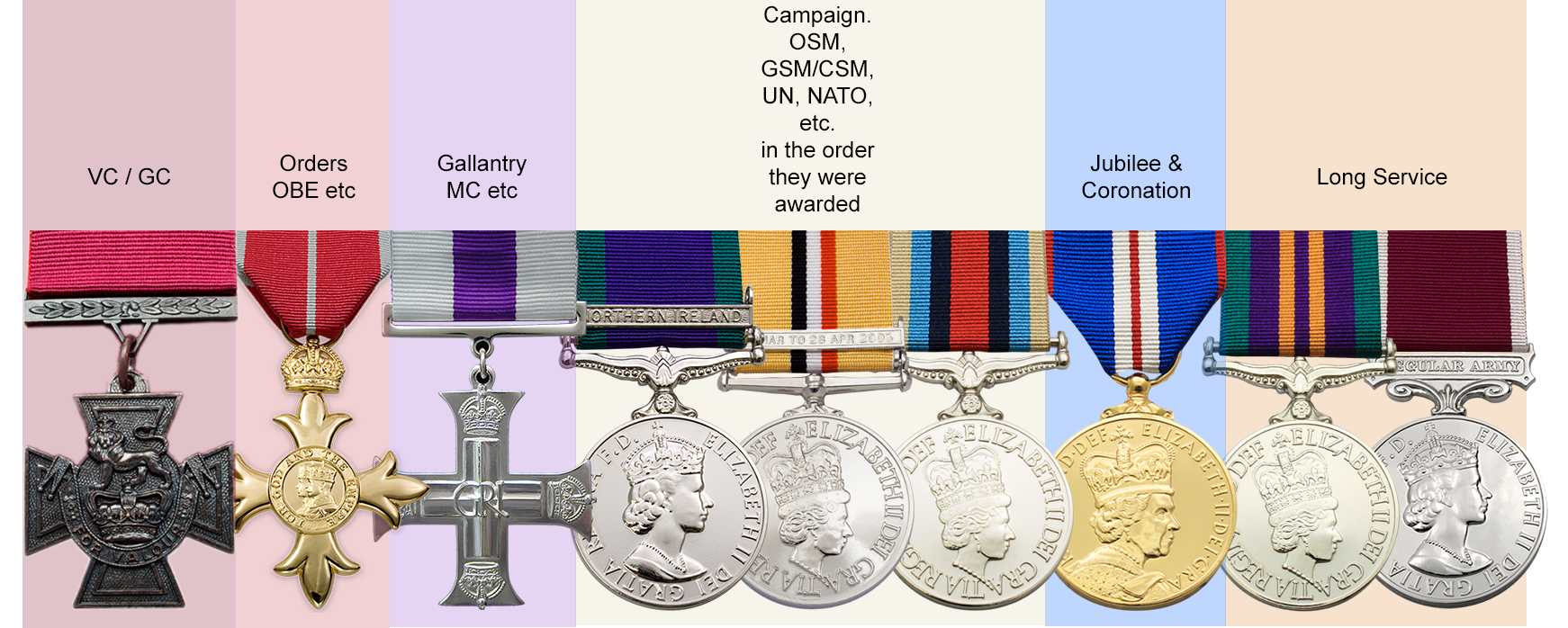
 Medal mounting swing style is the more traditional method of mounting medals. Swing Style or ordinary style mounted medals are mounted on a medal brooch bar which can then be pinned to your tunic directly, through becketts or attached to a pocket holder. This style of medal mounting allows the medals to move or ‘swing’ when worn. Over time, the edge of the medals can become damaged due to the medals “clinking” together.
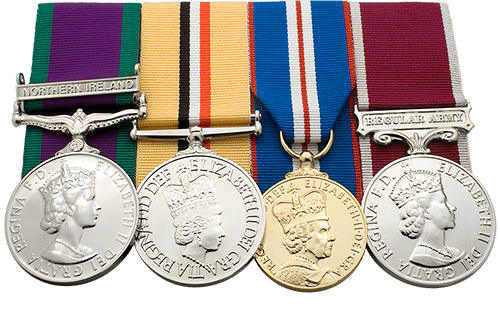 Medal mounting court style is alleged to have began during the reign of Queen Victoria. Those attending the Queen would wear medals court mounted to stop them “clinking”. Other sources suggest that the Cavalry first adopted the practice. Either way, this style of medal mounting is becoming more popular. Court mounted medals are fixed to a rigid backing material called buckram. The buckram is then covered in a felt material before the medals are mounted on their own ribbon length. This style of medal mounting holds the medals firmly in place and prevents them ‘clinking’ together and damaging each other when worn.
Reviews
There are no reviews yet.