

Description
Charles I Royal Richmond Farthing.
In an effort to put a stop to the illegal pewter and lead tokens which were issued by private traders, James 1 granted a license in 1613 to Lord Harrington to strike copper farthings on condition that the profits from their production was shared with the King. The farthings were not accepted with much enthusiasm by the populace so the early issues were tinned to make them look more like silver coins. They were issued 21 shillings worth for 20 shillings sterling and in consequence were extensively counterfeited.
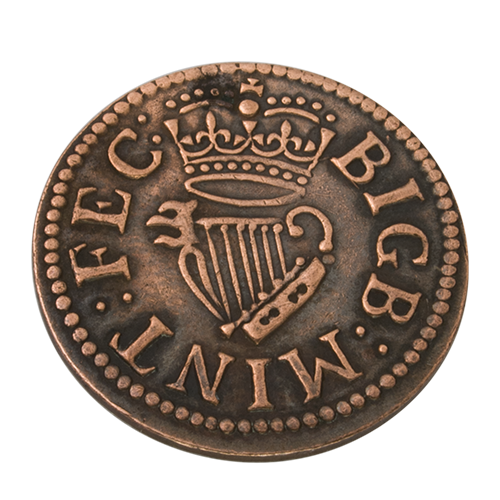
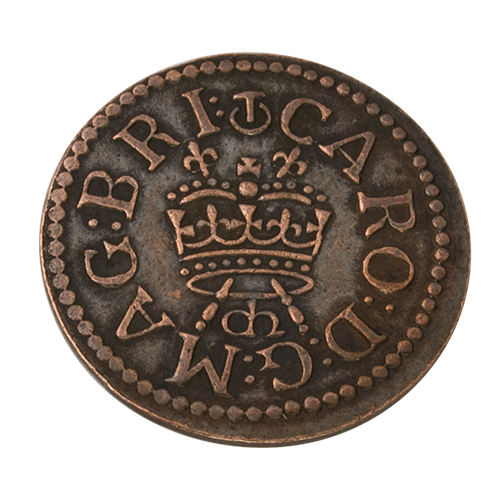
On Harrington’s death the license was purchased by the Duke of Lennox and on his death in 1624 passed to his widow the Duchess of Richmond. With the exception that Richmond farthings now have the name of Charles, the design remained similar to those of previous issues. The obverse shows a crown on crossed sceptres and on the reverse a crowned harp. The obverse carries titles “CARO; D.G; MAG; BRI;” which continues on the reverse FRA: ET: HIB: REX (Charles by the grace of God, King of Great Britian, France and Ireland). The farthings whilst carrying the Royal titles were not strictly legal tender, since they were produced and issued privately. They were intended as a convenience to provide change.
After the licence finally passed to Lord Maltravers two further types were issued, namely the Maltravers farthing and the “rose farthing”, the latter showing a rose on both sides. They were finally discontinued about 1644.
There is in existence a strip of nine uncut farthings and it is fairly conclusive that these coins were struck by passing the strips of copper between two rollers. One carried the impression of nine obverses and the other with nine reverses. After striking the coins would be punched out from the strips.
This is a copy of a Richmond farthing bearing the mint signature of the Bigbury Mint.
This excellent quality, semi-reproduction coin is struck in our Devon workshop.
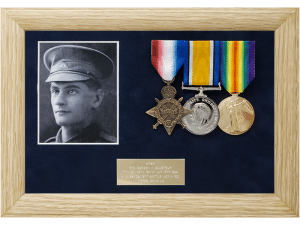 Medals are mounted ready for wear and then placed on a block within the frame. This allows for the easy removal and replacement of the medals as required, meaning they can be removed for wear on parade or for cleaning.
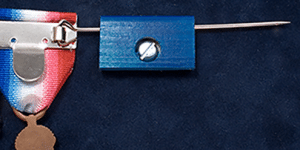 The medals will hang from the block at a slight angle much as they would if they were being worn on the chest.
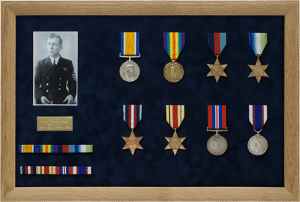 Medals are not mounted ready for wear and instead are placed flat against the frame backing with the medal ribbon secured through a slot. This means that the medals cannot be removed from the frame and cannot be worn.
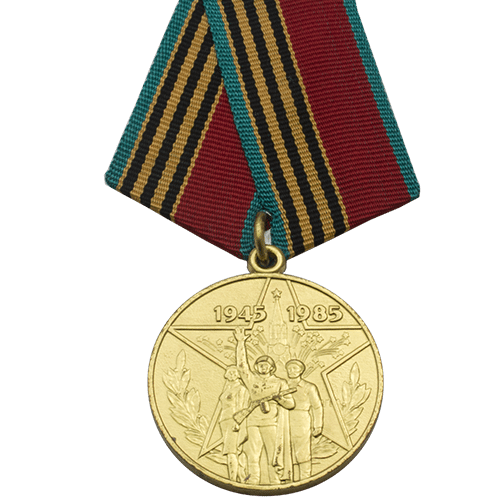
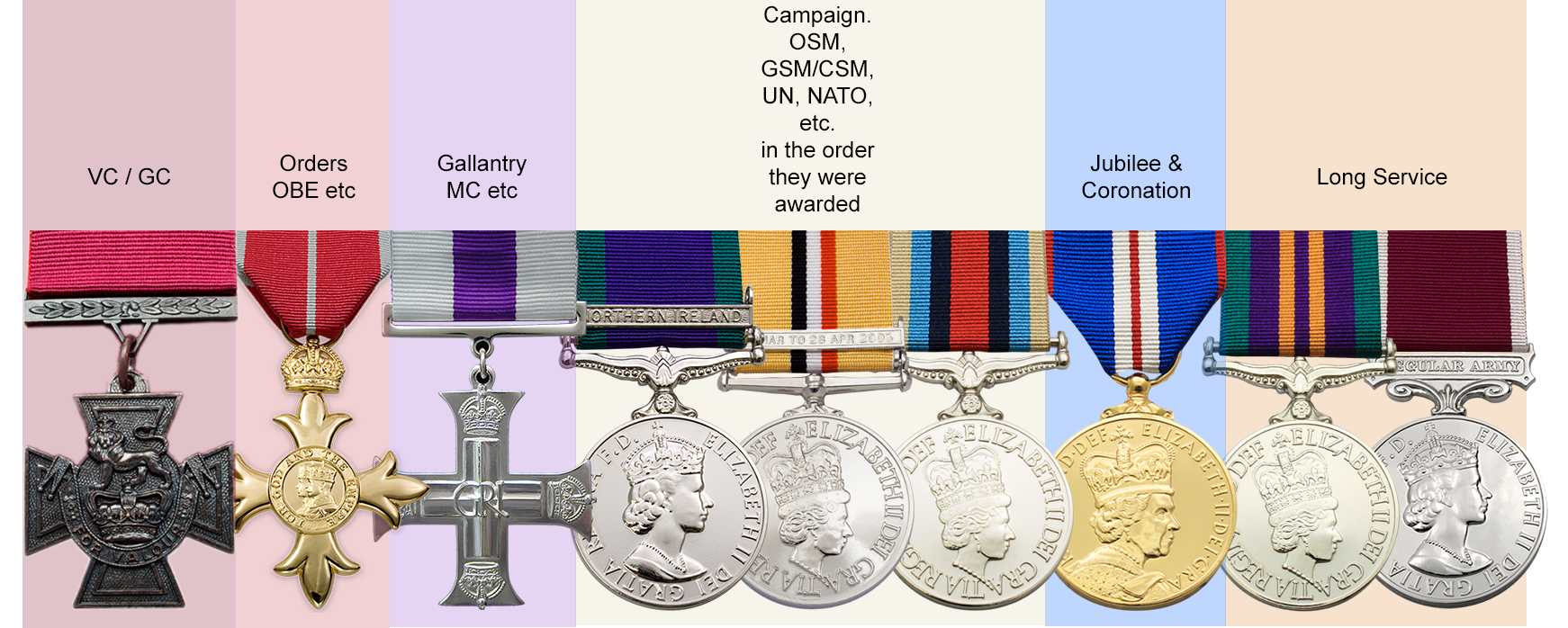
 Medal mounting swing style is the more traditional method of mounting medals. Swing Style or ordinary style mounted medals are mounted on a medal brooch bar which can then be pinned to your tunic directly, through becketts or attached to a pocket holder. This style of medal mounting allows the medals to move or ‘swing’ when worn. Over time, the edge of the medals can become damaged due to the medals “clinking” together.
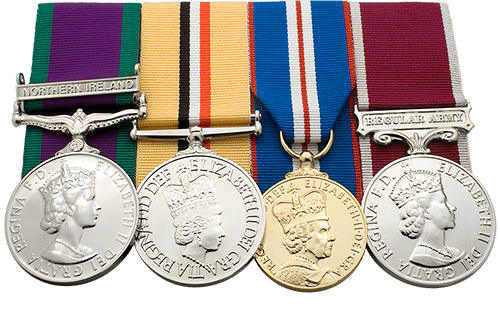 Medal mounting court style is alleged to have began during the reign of Queen Victoria. Those attending the Queen would wear medals court mounted to stop them “clinking”. Other sources suggest that the Cavalry first adopted the practice. Either way, this style of medal mounting is becoming more popular. Court mounted medals are fixed to a rigid backing material called buckram. The buckram is then covered in a felt material before the medals are mounted on their own ribbon length. This style of medal mounting holds the medals firmly in place and prevents them ‘clinking’ together and damaging each other when worn.